Clean Energy Smashes World Record: Nearly 700 GW of New Capacity Added in 2025

The world just had its best year ever for clean energy. In 2025 a record 692 gigawatts (GW) of new renewable power capacity was installed, lifting the global total to 5,149 GW — a 15.5% jump in a single year — according to the Renewable Capacity Statistics 2026 report released in early April 2026 by the International Renewable Energy Agency (IRENA).
It is the largest annual increase in history, and a sign that the shift to clean power is not slowing down despite a volatile global economy.
The record-breaking numbers
At the heart of the growth is solar power, which added 511 GW in a single year — roughly three-quarters of all new renewable capacity. Wind followed with 159 GW, setting its own record too.
Overall, renewables accounted for 85.6% of all new power capacity added in 2025. In other words, of every 10 new power plants built worldwide, nearly 9 were clean energy.
| Key 2025 figures | Amount |
|---|---|
| New renewable capacity | 692 GW |
| Global cumulative capacity | 5,149 GW |
| Annual growth | +15.5% |
| New solar capacity | 511 GW |
| New wind capacity | 159 GW |
| Renewable share of new capacity | 85.6% |
Data as of April 2026, IRENA
Asia and China lead the charge
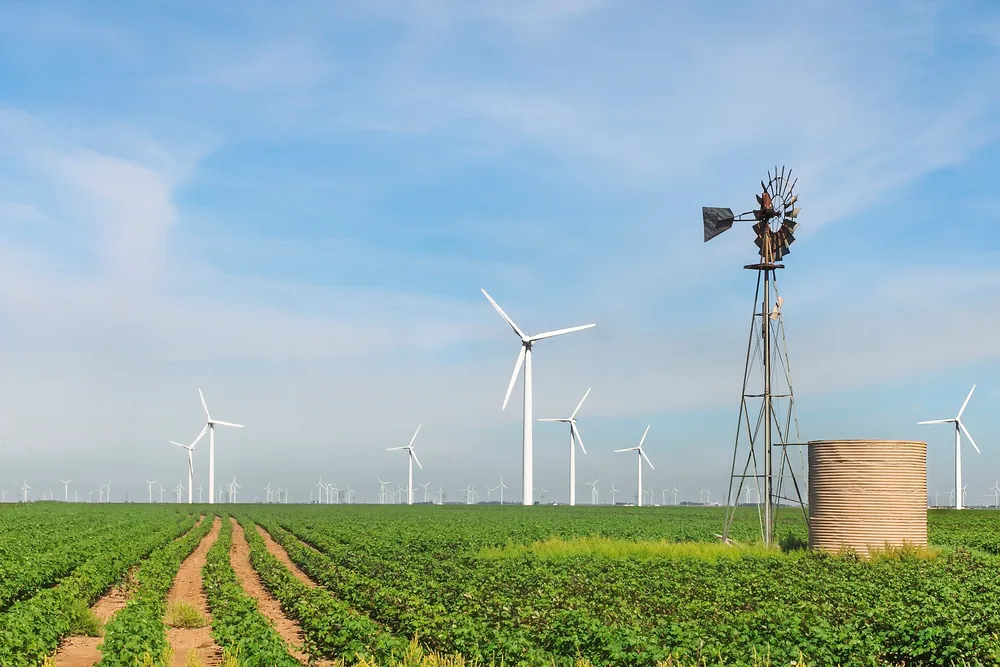 Illustrative photo: Matthew T Rader — CC BY-SA 4.0 (Wikimedia Commons)
Most of the growth came from Asia, with China clearly the biggest player. According to the IEA, China installed nearly 500 GW of new renewable capacity in 2025 — more than 60% of all global growth — split into nearly 370 GW of solar (13% above the prior year) and 117 GW of wind (a striking 48% higher).
India is accelerating too, installing a record amount of solar in the first quarter of 2026, while Spain, Portugal and Pakistan have all visibly cut their reliance on fossil fuels with renewables.
Why solar dominates: it's the cheapest
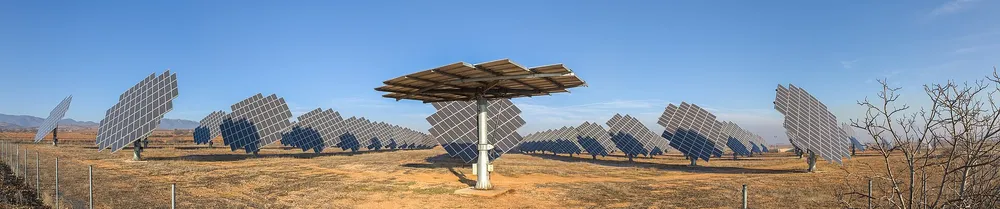 Illustrative photo: Diego Delso — CC BY-SA 4.0 (Wikimedia Commons)
The reason solar grew fastest is simple — it has become the cheapest electricity in history. The International Energy Agency (IEA) notes that in sun-rich regions, solar produces power for just a few cents per kilowatt-hour, undercutting coal and natural gas.
IRENA estimates that more than 85% of newly installed renewables now cost less than fossil-fuel alternatives. Costs have fallen dramatically since 2010:
| Technology | Cost decline since 2010 |
|---|---|
| Solar PV | about 87% |
| Onshore wind | about 55% |
| Battery storage | about 93% |
These falling prices are not abstract — they are the same force making rooftop solar and electric vehicles more appealing.
Batteries: the missing piece
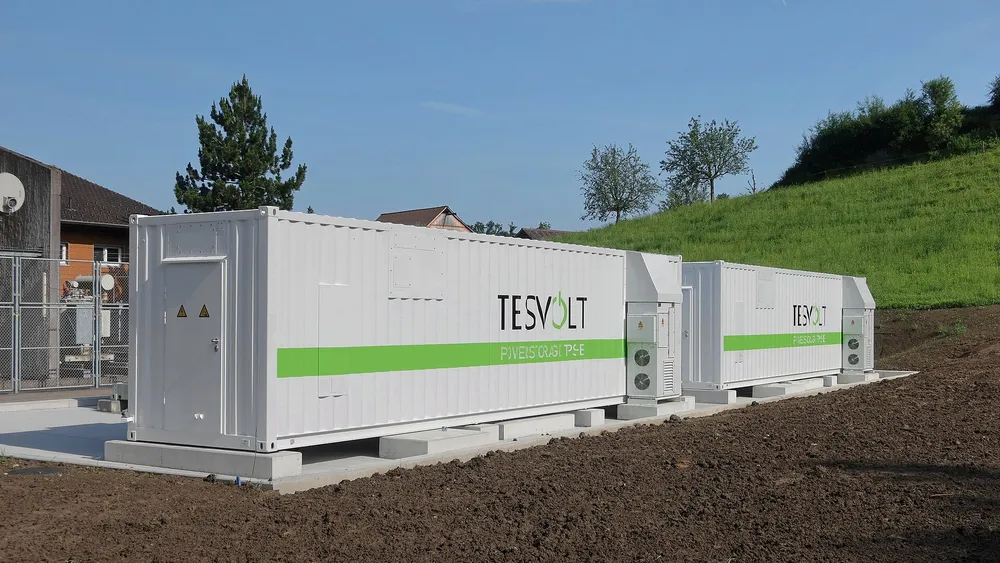 Illustrative photo: Kecko from Eastern Switzerland — CC BY 2.0 (Wikimedia Commons)
The biggest drawback of solar and wind is that they don't generate all the time — no sun at night, no steady wind. The answer is battery energy storage, which is now growing explosively.
In 2025 the world installed a total of 275.3 gigawatt-hours (GWh) of energy storage, up more than 61% on the previous year, with another 353 GWh or so expected in 2026. With battery costs down 93% since 2010, storing clean power for use at night or during peak demand has become genuinely economical.
A turning point: clean power draws level with coal
The growth is reshaping the global electricity system. In its Electricity 2026 report, the IEA says renewable output in 2025 was "virtually matching" coal-fired generation, while independent analysts at Ember estimate the crossover where renewables overtook coal may have happened even earlier, in the first half of 2025.
The combined share of wind and solar in global electricity rose from 4% in 2015 to 17% in 2025, and is expected to approach 20% in 2026.
"The current crisis clearly demonstrates the strategic case for renewables as a national security imperative." — Francesco La Camera, Director-General of IRENA
What it means for readers in Thailand
These are global figures, but the impact reaches Thai wallets directly. As China and India produce vast quantities of solar panels and batteries, the worldwide price of the hardware — including what is imported and sold in Thailand — falls with it. Thai households and businesses looking to install rooftop solar or buy an electric vehicle benefit from these lower costs.
Readers following energy and EVs in Thailand can read more in our story on Thailand's record EV sales, and find more good news on our news page.
The transition is far from finished, of course — the world still needs heavy investment in grids, storage and smart networks. But the 2025 figures confirm a clear direction: clean energy is no longer just the environmentally friendly choice, it is also the cheapest one.
Sources
Frequently asked questions
- What counts as renewable energy?
- Electricity made from sources that never run out and emit no carbon as they generate — solar, wind and hydropower — as opposed to burning coal or natural gas.
- How much is one gigawatt (GW)?
- One gigawatt equals 1,000 megawatts, enough to power hundreds of thousands of homes. Adding 692 GW in a single year is therefore enormous.
- Why has solar power become so cheap?
- Solar panel costs have fallen about 87% since 2010 thanks to mass production and better technology, making it the cheapest source of new electricity in many regions.
- Why does this matter for readers in Thailand?
- Cheaper clean-energy hardware worldwide drives down the price of solar panels and electric vehicles in Thailand, and adds momentum to the country's own renewable investments.
Related news
 World
WorldA Quiet Milestone: 79% of the World's Adults Now Have a Financial Account
The World Bank's Global Findex 2025 finds 79% of adults worldwide own a bank or mobile-money account, up from 51% in 2011, driven by mobile phones.
 World
WorldTrump Hits Canada with 50% Tariffs — A New Trade-War Escalation Shakes Global Markets
The US imposed 50% tariffs on roughly $20 billion worth of Canadian imports — from wine to cement to furniture — using a Depression-era law. Canada's PM Carney called it a 'direct violation' of USMCA but opened the door to talks.
 World
WorldUS Strikes Iran Again as Three Tankers Attacked in Strait of Hormuz
Three commercial vessels were attacked in the Strait of Hormuz on July 7, 2026 — the US struck Iran and reimposed oil sanctions, lifting Brent crude 5.5%.