Sodium-Ion Batteries Hit Mass Production in 2026: A Cheaper, Safer Power Source Made From Salt

A battery made largely from one of the most common substances on Earth — salt — is finally leaving the laboratory. In 2026, sodium-ion batteries are reaching genuine mass production, powering the world's first commercially sold sodium-ion electric car, anchoring the largest grid-storage order in the technology's history, and closing in on the price of the lithium batteries that have dominated for three decades.
It is a quiet but significant milestone in the global push for cheaper and safer energy storage — and one built on a material that is roughly a thousand times more abundant than lithium.
From the lab to the factory floor
Sodium-ion technology is not new as an idea, but turning it into a product people can buy has taken years. Chinese battery giant CATL — the world's largest battery maker — says it began sodium research back in 2016, unveiled a first-generation cell in 2021, and has since invested around 10 billion yuan (about US$1.4 billion) to make it real.
That work is now paying off. In 2026 CATL is rolling out its sodium brand, Naxtra, across four areas: passenger cars, commercial vehicles, battery swapping, and grid energy storage. CATL's chief technology officer, Lin Jiubiao, summed up the shift bluntly: "The sodium-ion battery has entered an era of comprehensive productisation."
The world's first mass-production sodium-ion car
The headline product is an electric car. The Changan Nevo A06, due to reach the Chinese market in mid-2026, is set to be the world's first mass-production EV powered by a sodium-ion battery.
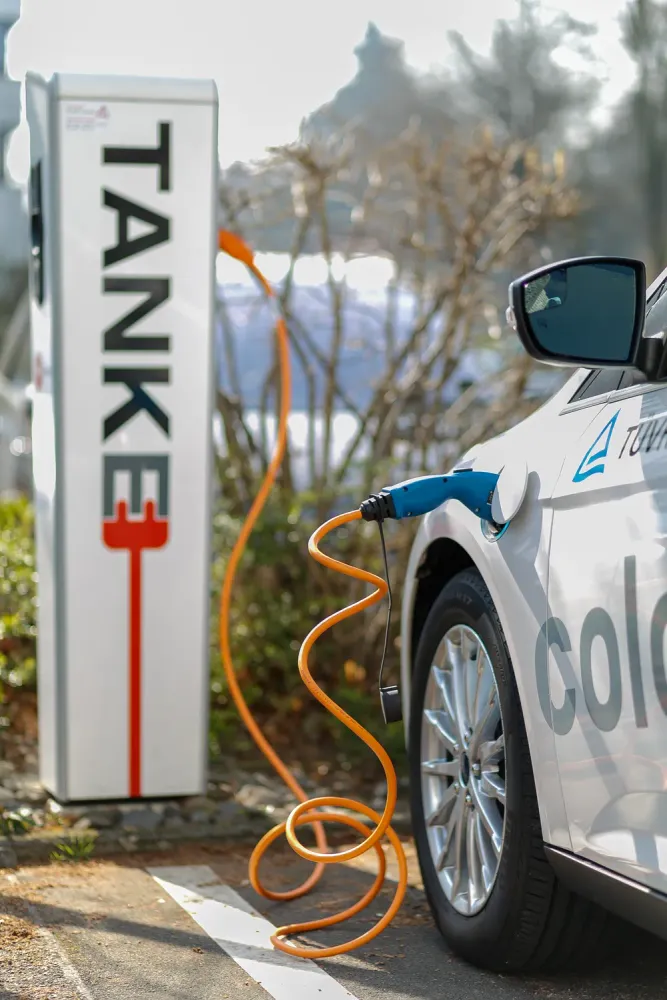 Illustrative photo: an electric vehicle charging — CC image via Wikimedia Commons
CATL's Naxtra cell behind it reaches an energy density of about 175 Wh/kg — what the company calls the highest yet achieved in mass production for sodium chemistry — and supports a driving range of over 400 km on a charge, with future versions targeting 500–600 km.
What stands out is cold-weather performance, long a weakness of lithium batteries. CATL says the Naxtra cell keeps over 90% of its capacity at –40°C, delivers nearly triple the discharge power of a comparable lithium iron phosphate (LFP) pack at –30°C, and continues working down to roughly –50°C. In safety testing the cells reportedly produced no smoke or flame after being crushed, punctured and sawn.
| CATL Naxtra (EV) | Figure |
|---|---|
| Energy density | ~175 Wh/kg |
| Driving range | 400+ km |
| Capacity retained at –40°C | over 90% |
| Materials | cobalt-free, nickel-free, aluminium foil |
| Market launch | mid-2026 (China) |
Data as of June 2026, per CATL.
The bigger prize: storing power for the grid
Cars grab attention, but the largest impact may be on energy storage for the electricity grid — the giant battery banks that store solar and wind power so it can be used at night or during peak demand.
In April 2026 CATL unveiled what it calls the world's first sodium-ion battery designed specifically for grid storage, with commercial deployment expected within the year. The cells are cobalt- and nickel-free, swap copper foil for cheaper aluminium, hit roughly 160 Wh/kg, run a 97% energy-conversion efficiency, and are rated for more than 15,000 charge cycles while keeping 80% of their capacity — equivalent to decades of daily use. They operate from –40°C to 70°C and showed no thermal runaway in nail-penetration, crush and overcharge tests.
The scale of demand is striking. CATL has signed a three-year agreement with Beijing HyperStrong Technology to supply 60 GWh of sodium-ion batteries for grid storage — described as the largest sodium-ion commercial order in history.
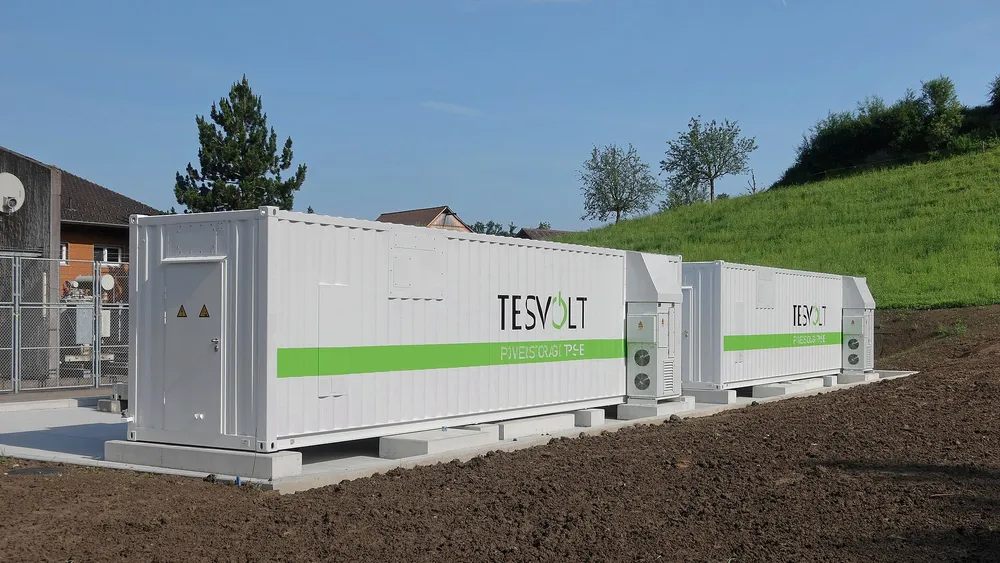 Illustrative photo: grid-scale battery storage — Kecko, CC BY 2.0 (Wikimedia Commons)
Why salt beats scarcity
The appeal of sodium comes down to supply and cost. Sodium is about a thousand times more abundant in the Earth's crust than lithium, and sodium cells avoid the expensive and supply-constrained cobalt, nickel and copper that lithium batteries rely on — using cheap aluminium current collectors instead.
That is steadily eroding the cost gap. According to a June 2026 report cited by Chinese outlet National Business Daily, the price of hard-carbon anode material — a key sodium-battery component — is expected to fall from 60,000–70,000 yuan per tonne in 2024 to 35,000–40,000 yuan by 2026, with analysts projecting sodium-ion cells to reach cost parity with lithium iron phosphate by late 2026. Some independent estimates already put sodium cells at a discount.
This sits alongside the broader collapse in clean-energy costs — battery prices have fallen roughly 93% since 2010 — that helped the world add a record amount of renewable power in 2025.
A research surprise: a battery that also cleans water
Innovation isn't only happening in factories. In a study published in the Journal of Materials Chemistry A, researchers at the University of Surrey in the UK found a deceptively simple trick: keeping the natural water inside a sodium-based material (sodium vanadate hydrate) instead of removing it, as is conventional.
The "wet" version stored nearly twice the charge, charged faster, and stayed stable for over 400 cycles. Remarkably, the same system worked in seawater — pulling sodium and chloride ions out of the water, hinting at future batteries that store energy and help desalinate seawater at the same time.
"Our results were completely unexpected," said lead author Dr Daniel Commandeur. "The material showed much stronger performance and stability than expected." It is early-stage science, not a product — but it shows how much room sodium chemistry still has to grow.
What it means for readers in Thailand
These are global developments, but the benefit reaches Thai consumers. Cheaper, safer batteries made from abundant materials push down the worldwide price of electric vehicles and home and grid energy storage — the very hardware imported and sold in Thailand — and reduce reliance on volatile lithium prices.
For a country with record EV sales and fast-growing rooftop solar, a more affordable battery is good news. Readers weighing an electric car can read our explainer on EVs versus petrol vehicles, and find more positive technology stories on our news page.
Sodium batteries won't replace lithium overnight — lithium still wins on energy density for compact, long-range uses. But 2026 marks the year salt-based batteries stopped being a promise and started becoming a product.
Sources
- New Atlas — World's first mass-production sodium-ion EV arrives
- ESS News — A closer look at CATL's new sodium-ion battery
- Car News China — Sodium-ion to reach cost parity with lithium by late 2026
- New Mobility — CATL's 60 GWh sodium-ion grid deal
- ScienceDaily — Sodium-ion battery stores twice the energy and desalinates seawater
Frequently asked questions
- What is a sodium-ion battery?
- A rechargeable battery that uses sodium — the element found in ordinary table salt — to store and release energy, instead of the scarcer lithium used in most batteries today. Sodium is roughly a thousand times more abundant in the Earth's crust than lithium.
- Are sodium-ion batteries cheaper than lithium ones?
- They are getting close. In 2026 analysts expect sodium-ion cells to reach cost parity with lithium iron phosphate (LFP) batteries, with some estimates putting sodium cells below lithium. Sodium also avoids expensive cobalt, nickel and copper.
- Are sodium-ion batteries safe?
- Maker tests are encouraging. CATL says its grid-storage sodium cells showed no thermal runaway (the chain reaction that causes battery fires) in nail-penetration, crush and overcharge tests, and its EV cells produced no smoke or flame in crush, puncture and saw tests.
- Do they work in cold weather?
- Notably well. CATL's Naxtra EV battery is rated to keep over 90% of its capacity at –40°C and to keep working down to about –50°C — a known weak point for lithium batteries.
- Why does this matter for readers in Thailand?
- Cheaper, safer batteries made from abundant materials lower the global price of electric vehicles and home/grid energy storage — the same hardware imported and sold in Thailand — and strengthen the case for the country's growing EV and solar markets.
Related news
 Thailand
Thailand EV Sales Smash Records in Jan 2026 — Over 44,000 Units, 48% Share, as Kingdom Becomes ASEAN's EV Export Base
Thailand's battery-EV registrations hit a record 44,000-plus in January 2026 with EV share at 48%, as BYD's Rayong plant ships Thai-built cars to Europe.
 World
WorldNASA Set to Launch Roman Space Telescope to Probe the Universe
NASA is set to launch the $4.3 billion Nancy Grace Roman Space Telescope aboard a Falcon Heavy on Aug 30, 2026, to investigate dark energy and hunt for exoplanets.
 World
WorldScientists Generate Quantum Entanglement From Sunlight
University of Ottawa and Max Planck Institute researchers used sunlight, not a laser, to create entangled photon pairs with 94% fidelity.