Doi Inthanon 2026 — Fees, Kew Mae Pan, Twin Pagodas, One-Day Plan
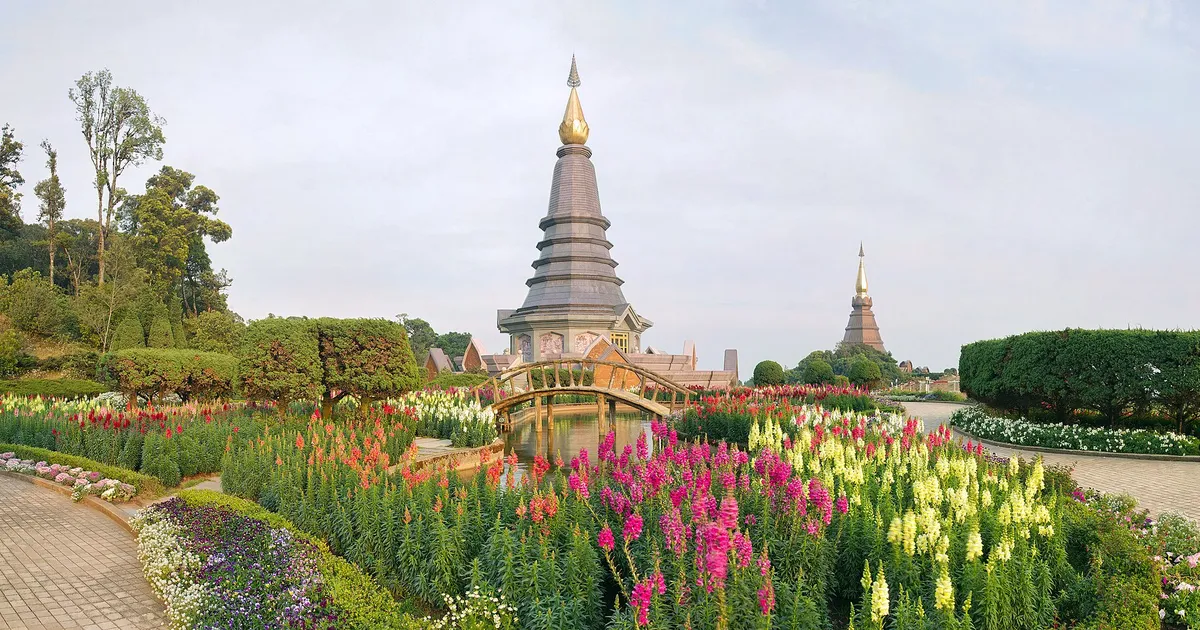
If you want real cold without flying abroad, Doi Inthanon is the first mountain Thais think of. The summit is 2,565 metres, the highest point in the country, and late in the year the sky is at its clearest. This guide collects what could be verified from public sources as of November 2026 — fees, opening hours, stops in road order, and a one-day plan that doesn't waste hours on the road — and says plainly which numbers deserve a second check before you leave.
Overview: where it is and how far
The park lies roughly 100 km southwest of Chiang Mai, about two hours each way. The main route is Highway 108 south for about 58 km to the Chom Thong junction, then Route 1009 for about 48 km to the summit. The fee checkpoint sits around km 8.
The key planning fact: no public bus runs between stops inside the park. You need your own vehicle, a driver, or a tour. Every major stop lies along the same road, so "stop on the way up, drive straight down" works well.
Choosing your season: cold, cloud, rain and smoke
| Period | Conditions | Pros | Cons |
|---|---|---|---|
| Nov–Feb | Cool and dry | Clearest views, Kew Mae Pan open, coldest late Dec–Jan | Crowds at New Year and long weekends |
| Mar–Apr | Warmer, burning-season smoke | Fewer people | Haze hides the views |
| May–Oct | Rain and cloud | Waterfalls at full flow (Jul–Sep wettest), green forest | Kew Mae Pan closed from June, cloud over the summit |
Numbers that matter: the summit averages about 6°C in January while Chiang Mai nights average about 16°C, and −5°C was recorded at km 44.4 on 21 December 2017. Even if the city is comfortable, treat the summit as another season.
Comparing winter destinations? See cool-season trips 2026, and plan leave around 2027 long weekends and the holiday calendar.
Costs: what you pay where
Most fees are cash only and sources disagree on a few items, so here is what's most reliable.
| Item | Price found | Note |
|---|---|---|
| Park entry, Thai | 60 baht (adult) / 30 (child) | Paid at the km 8 checkpoint |
| Park entry, foreign | 300 / 150 baht (child 3–14) | |
| Car / motorbike | 30 / 20 baht | |
| Twin pagodas | about 100 baht per person | Not park-run; some old sources say 40 |
| Royal Agricultural Station | about 20 baht | Not park-run |
| Kew Mae Pan guide | about 200–220 baht per group | Compulsory; carry spare cash |
| Pha Dok Siew guide | about 220 baht per group (max 10) | Ride back to start about 150 baht |
| Camping | 30 baht per person per night | Tent for 3 about 225; bedding set 60 |
| Park bungalows | 1,000–6,500 baht per night | About 30% off Mon–Thu; book by phone 053 286 729 |
Sample day budget for two Thais in their own car from Chiang Mai: entry 120 + car 30 + pagodas 200 + Kew Mae Pan guide ~200 = about 550 baht before fuel and food — clearly below a 1,200–1,800 baht per-person tour, which in return spares you the mountain driving.
Stops in kilometre order
Listed in road order so you never double back, and usable as a timing checklist.
1) Wat Phra That Si Chom Thong — a royal temple popular as a stop before or after the climb, open roughly 08:00–17:00. A good last stop on the way down.
2) Mae Klang Waterfall — the first big fall, about 600 m from the checkpoint, with food stalls.
3) Mae Ya Waterfall — a detour of about 14 km from Chom Thong; roughly 40–50 m high and 100 m wide, best during and after the rains. It is off the main route, so only if you have time.
4) Wachirathan Waterfall (km 21) — the best-known fall on the mountain, open about 06:00–17:00. Swimming is not allowed. Heavy spray; lower flow in the dry season but still a great photo stop.
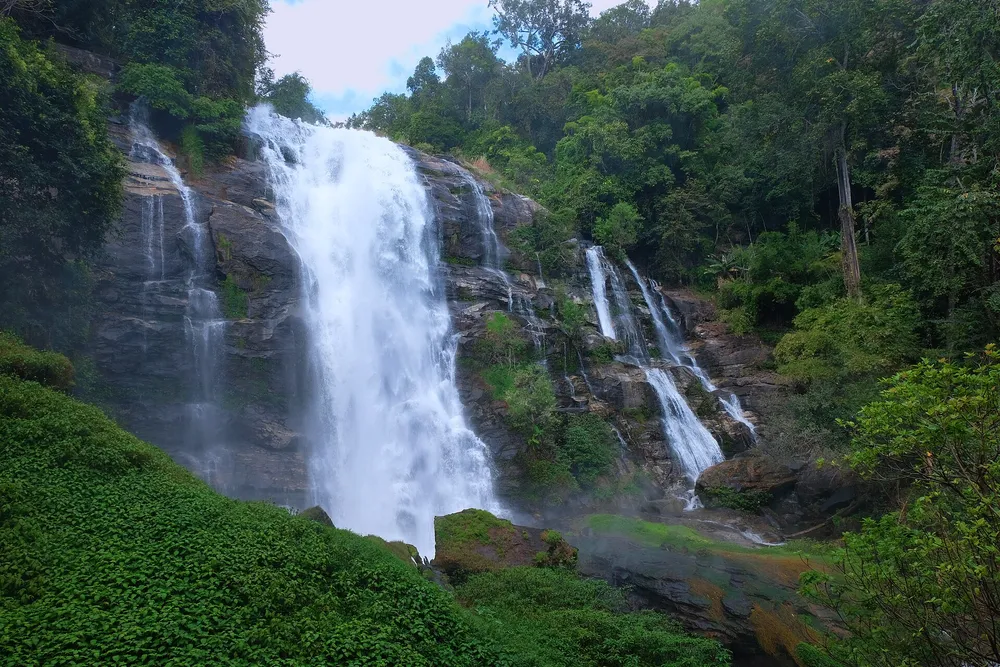 Photo: Wanwipu Ratchamueangfan — CC BY-SA 4.0 (Wikimedia Commons)
5) Siritharn Waterfall (km 22) — viewed from a platform only; the base is not reachable.
6) Royal Agricultural Station Inthanon — a royal project begun in 1979. Nearby Siriphum Falls has wild cherry blossom in late January–February (timing varies with the weather each year).
7) The twin royal pagodas (km 41.5) — built in 1987 and 1992 and open roughly 07:00–17:00. This is the mountain's postcard view: ridge after ridge from the terrace, with flower gardens around the pagodas (see the cover photo).
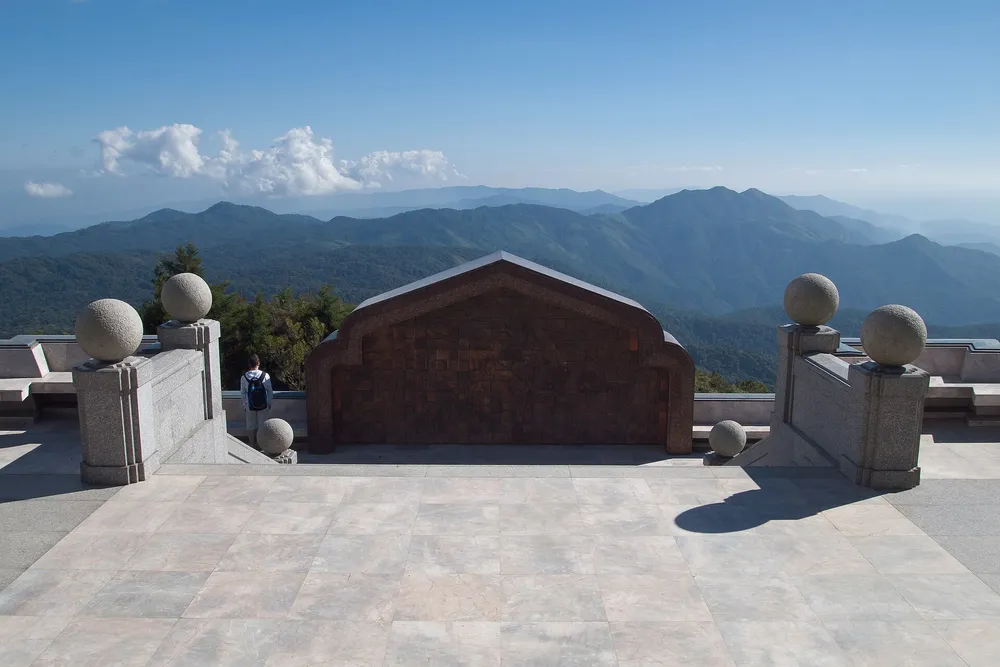 Photo: Vyacheslav Argenberg — CC BY 4.0 (Wikimedia Commons)
8) Kew Mae Pan Nature Trail (km 42) — see the next section.
9) The summit (km 48) — the 2,565 m marker is a few minutes' walk from parking, and the Ang Ka boardwalk (about 360 m) loops through cloud forest. One source cites about 500 bird species. Cloud often covers the top, so don't count on a long view every day.
Kew Mae Pan: leave time for it
Kew Mae Pan is a loop of about 2.5–3 km taking 2–3 hours through cloud forest, with open viewpoints over the ridges. It is open from 1 November to 31 May, and a local Hmong guide is compulsory for every group. Walks start from about 06:00 and the last group should leave around 15:00.
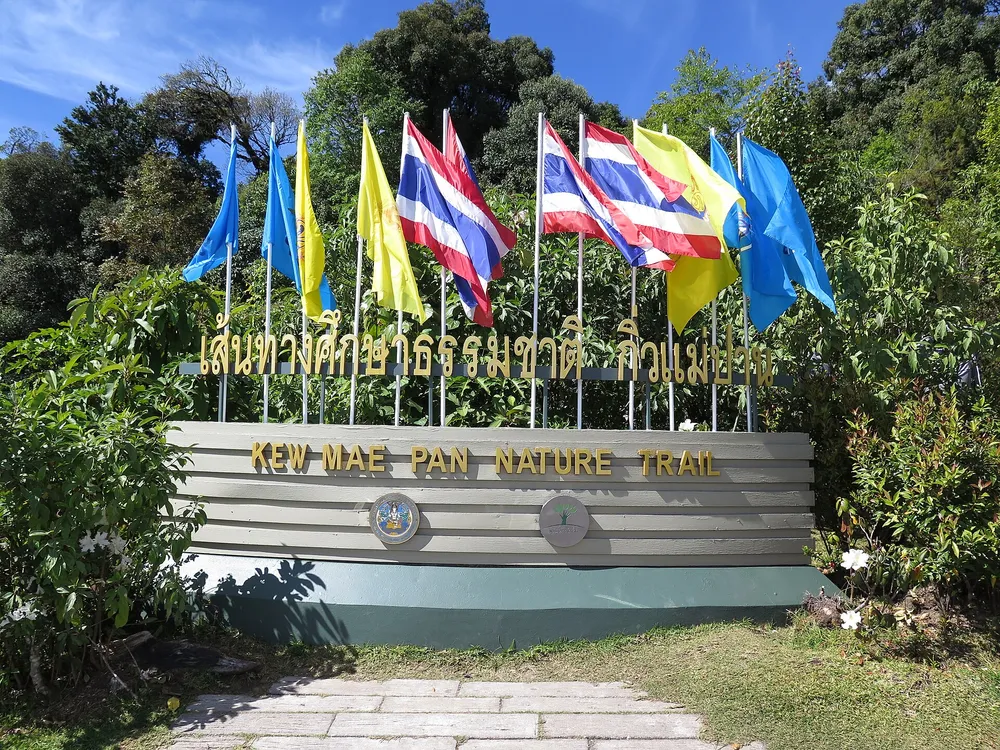 Photo: Douglas Perkins — CC BY 4.0 (Wikimedia Commons)
Before you walk:
- Some sections have steps and steep ground; grippy shoes matter more than a camera.
- In heavy rain the trail can close even in season — check at the entrance.
- Budget it separately from the summit and pagodas; don't squeeze everything into late afternoon.
- A popular alternative is Pha Dok Siew (about 2.6 km to the Karen coffee village of Ban Mae Klang Luang), best June–October, also with a guide.
Getting there from Chiang Mai: 5 options
| Option | Cost found | Best for |
|---|---|---|
| Day tour | 1,200–1,800 baht per person (9–10 h, hotel pickup) | Solo travellers who don't want to drive |
| Car with driver | 2,700–3,200 baht per car, fees extra | Groups of 3–4 |
| Self-drive | Fuel + 30 baht | Most flexible |
| Rented scooter | 150–250 baht per day + fuel | Use 150cc or larger |
| Songthaew to Chom Thong + charter | About 800 baht to charter up | Cheapest, but 2.5–3 hours of changes |
If renting a scooter, carry the right licence — there are police checkpoints around Chiang Mai — and note that many travel policies exclude motorbike riding; read the terms of travel insurance first.
Driving an EV? Plan charging before the climb with the EV trip planner rather than counting on finding a charger up top, and see Thailand road-trip tips.
Where to stay: on the mountain or back in town
- Camping inside the park near headquarters around km 31, normally open about 1 October–15 February; no restaurant at the site.
- Park bungalows at 1,000–6,500 baht per night, booked by phone (one source says the online system was down this season).
- Village homestays and resorts near the entrance — rates vary by season; call directly.
- Return to Chiang Mai if you leave early; see lodging options and a 3-day plan in the Chiang Mai guide.
Why sleep up top once: you see the summit and pagodas before the crowds, the road is quiet, and you avoid driving down in the dark.
One-day plan from Chiang Mai (start 06:00)
| Time | Activity |
|---|---|
| 06:00 | Leave town; fill the tank and carry cash |
| 08:00 | Chom Thong, breakfast |
| 08:30 | Km 8 checkpoint → Wachirathan Waterfall |
| 10:00 | Twin pagodas (good light, crowds still thin) |
| 11:30 | Kew Mae Pan, 2–3 hours |
| 14:30 | Summit + Ang Ka boardwalk |
| 15:30 | Start down in low gear |
| 17:00 | Wat Phra That Si Chom Thong if time allows |
Actual timing depends on traffic. On long weekends leave earlier still: one source says New Year's Day alone sees about 12,000 visitors.
Common mistakes and things to watch
- Not refuelling and not carrying cash — there are no ATMs; entry and food stalls take cash.
- Dressing for the city — it is far colder and windier on top; bring a jacket and hat.
- Riding the brakes downhill — use a low gear and engine braking.
- Starting Kew Mae Pan late — last start is around 15:00 and the walk takes 2–3 hours.
- Visiting in March–April for clear views — burning-season smoke hides them.
- Assuming the entry fee covers everything — the pagodas, Royal Agricultural Station and guides are separate.
- Swimming at Wachirathan — not allowed there.
Verdict: who it's for
Doi Inthanon is the best value for anyone wanting nature and cool air in one day from Chiang Mai, especially November to February. With your own car, go early and leave room for Kew Mae Pan. If you don't drive, a day tour is convenient — just check it includes Kew Mae Pan and the fees. Anyone who dislikes crowds should avoid long weekends and New Year. Overall rating: 4.5/5, losing points for festival-season crowds and views that depend on cloud and smoke.
Sources
- Visit Thailand Today — Doi Inthanon National Park Guide (fees, hours, stops by km, temperatures, lodging), checked November 2026
- Wongnai Trips — Kew Mae Pan (trail opening period and best season)
- Bangkok Biz News / TrueID Travel — cold-weather reports and Doi Inthanon attractions
- Nomado Travel / Bucketlistly — Doi Inthanon day-trip guides (guide fees and transport comparisons)
- National park fee schedule (Department of National Parks, Wildlife and Plant Conservation) — re-check at the gate before travelling
Frequently asked questions
- When is the best time to visit Doi Inthanon?
- November to February: cool and dry with the clearest views, and Kew Mae Pan is open. March–April has smoke haze. May–October has full waterfalls but heavy rain, and Kew Mae Pan closes from June.
- How much is the Doi Inthanon entrance fee?
- Per sources checked in November 2026: Thai adults 60 baht, children 30; foreign adults 300, children 150; car 30; motorbike 20, paid in cash at the km 8 checkpoint. The twin pagodas and the Royal Agricultural Station charge separately.
- Do I need a guide for Kew Mae Pan?
- Yes. A local guide is compulsory, about 200–220 baht per group. The loop is roughly 2.5–3 km and takes 2–3 hours, and it may close in heavy rain even during the open season.
- How do I get up without my own vehicle?
- Day tours from Chiang Mai run about 1,200–1,800 baht per person; a private car with driver is about 2,700–3,200 baht per car plus fees; or take a songthaew to Chom Thong and charter a truck up (about 800 baht), which is slow.
- Are the prices in this article current?
- They come from public sources checked in November 2026. Fees and rules change, so confirm with the park (bungalow line 053 286 729) or at the gate before you go.
Related articles

Chiang Mai Travel Guide 2026: Complete Guide to Doi Suthep, Doi Inthanon, Night Markets, 3-Day Itinerary & Real Costs
Complete Chiang Mai travel guide for 2026 — Doi Suthep, Doi Inthanon, Wachirathan Waterfall, Sunday Walking Street, northern Thai food, 4 ways to get there, accommodation for every budget, real costs, and a 3-day 2-night itinerary.
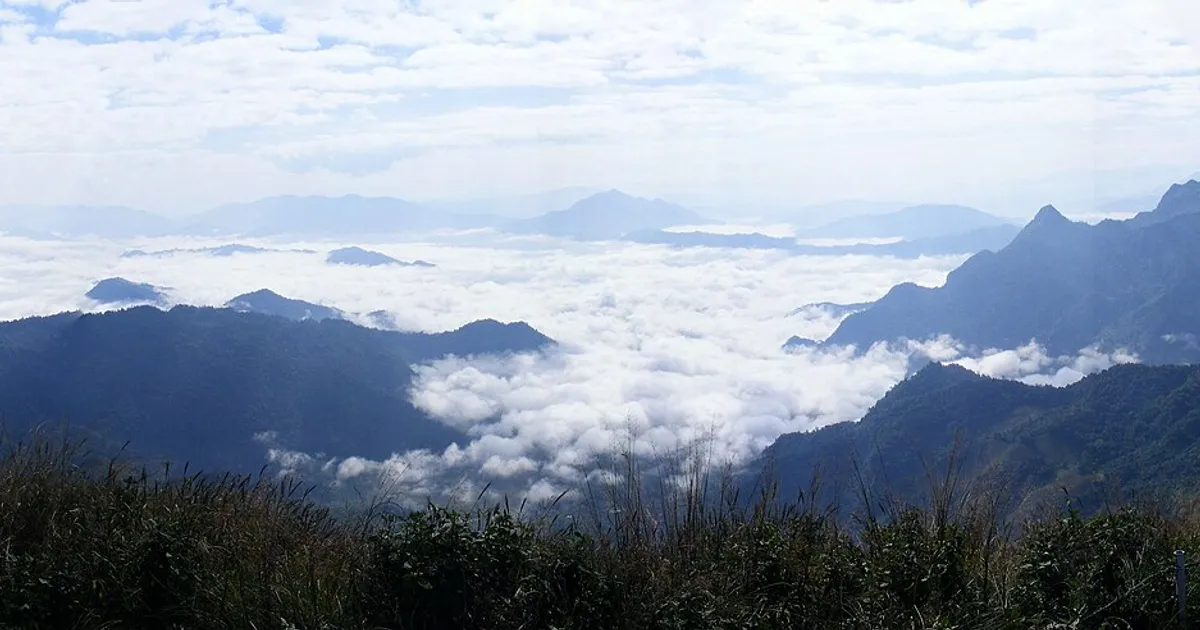
Phu Chi Fa, Chiang Rai 2026: Sea of Mist, Costs, Route and Trip Plan
Phu Chi Fa travel guide for 2026: best months for the sea of mist, driving routes from Chiang Rai, costs, the walk to the viewpoint, stays and border safety.
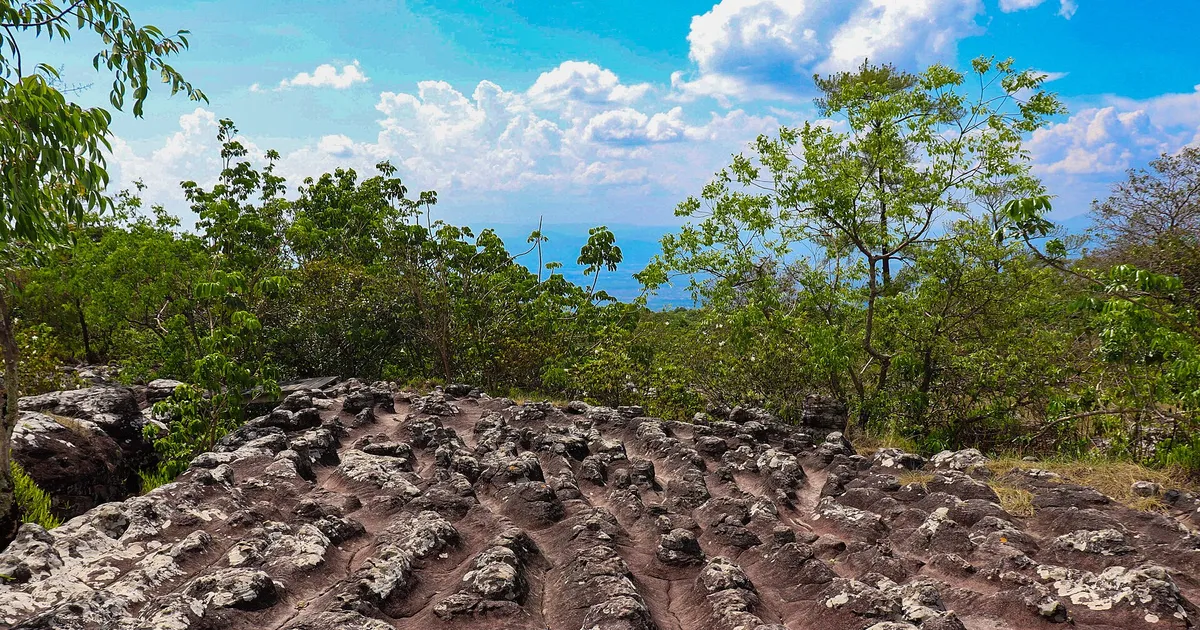
Phu Hin Rong Kla & Phitsanulok 2026: Lan Hin Pum, Pha Chu Thong
Phu Hin Rong Kla and Phitsanulok travel guide 2026: Lan Hin Pum, Pha Chu Thong, CPT history, fees, lodges, getting there, Thung Salaeng Luang and a 3-day plan.