Khao Yai National Park 2026: Complete Travel Guide — Fees, Itinerary & Tips

If you could visit only one national park in Thailand, most people who've been would say Khao Yai. Just 2–2.5 hours from Bangkok by car, it's the closest thing to a true wilderness in Central Thailand — a UNESCO World Heritage forest where gibbons call from the canopy at dawn, sambar deer stroll along the roadside, and you might encounter wild elephants crossing the road in front of your car. This guide covers everything you need to plan a visit in 2026: entrance fees, how to get there, which waterfalls to prioritize, the night safari, accommodation at every price point, and a practical 2-day itinerary.
Why Khao Yai Is Unlike Any Other Thai National Park
Khao Yai National Park was Thailand's first national park, established in 1962. Its 2,168 square kilometers span four provinces (Nakhon Ratchasima, Prachinburi, Saraburi, and Nakhon Nayok). In 2005 it was inscribed as a UNESCO World Heritage Site as part of the Dong Phayayen–Khao Yai Forest Complex — one of the most biodiverse tropical forest systems in Southeast Asia.
What makes it exceptional:
- All four hornbill species in one location: Khao Yai is the premier hornbill destination in Southeast Asia, with 440 bird species total
- Over 300 wild elephants: Thailand's largest population, with road encounters genuinely possible
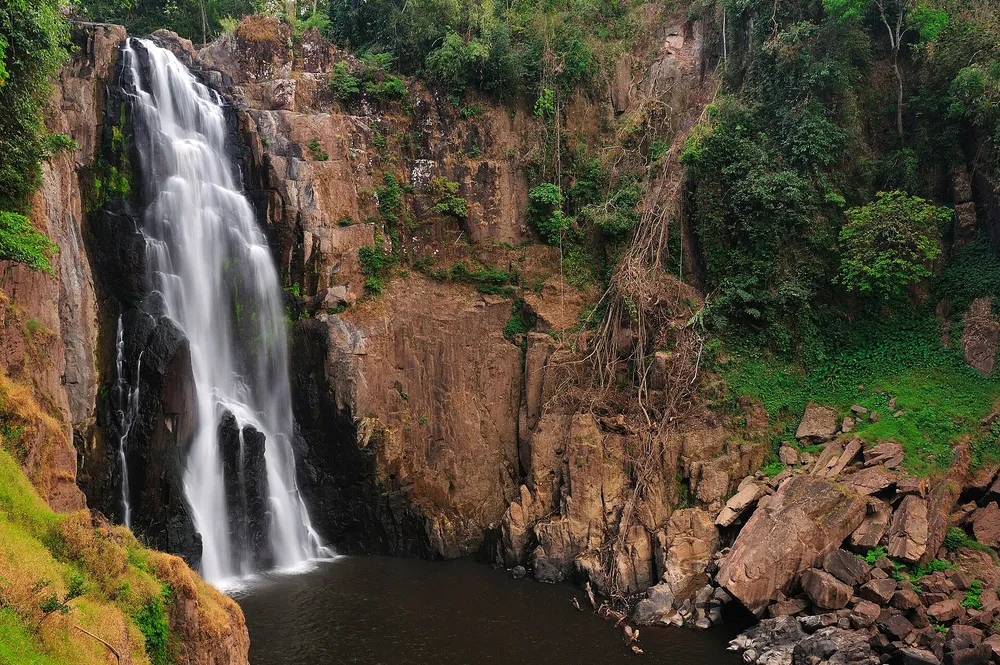
- World-class waterfalls: Haew Narok falls 150 meters and is at its most dramatic during the rainy season
- Proximity to Bangkok: ~200 km — a day trip is possible, but an overnight is transformative
The Waterfalls: What to See and Where
Waterfalls are Khao Yai's headliner attraction, especially from June through November when rainfall keeps them at full power. Four waterfalls deserve your time:
Haew Narok ("Abyss of Hell") — The park's crown jewel: 150 meters total, dropping in 3 tiers with the main cascade at ~80 meters. Located 22 km from the Visitor Center. The access trail is 1 km from the car park, then a 50-meter steep staircase descent to the viewing platform. In the rainy season the volume is so great that spray reaches you even on the platform — one of Thailand's most spectacular natural sights. Swimming is strictly forbidden; the currents have been fatal.
Haew Suwat — The famous one from the 2000 film The Beach. Just 25 meters high but beautifully shaped, with a cave forming behind the waterfall during dry season. Only 100 meters from its car park, making it the most family-accessible waterfall. Also reachable via the 3 km Trail 2 hike.
Pha Kluai Mai (Orchid Waterfall) — Named for the wild orchids blooming nearby, this 10-meter fall 7 km from the Visitor Center is quieter and less crowded, excellent for birding.
Kong Kaew — The smallest of the four but closest to the Visitor Center (100 meters), with a rope bridge crossing the stream. Ideal for families with young children.
Wildlife: What You'll Actually Encounter
Wildlife in Khao Yai isn't just for the dedicated naturalist — many species can be seen from the road or on short walks.
White-handed gibbons: You'll hear them before you see them. Their haunting, melodic duets echo through the forest at dawn. Spot them in the canopy near the Visitor Center.
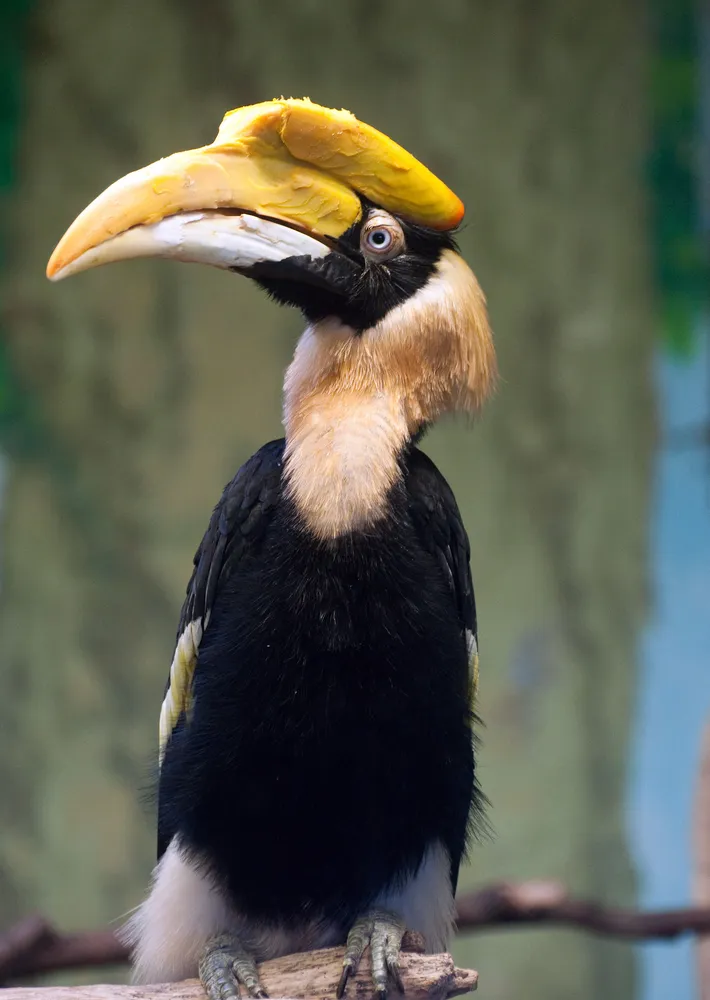
Great hornbills: Many visitors come to Khao Yai specifically for these. Their massive yellow-casqued bills, bold black-and-white plumage, and distinctive whooshing wingbeats make them unforgettable. Flocks of up to 300 gather at fruiting fig trees. All four Thai hornbill species are found here.
Sambar and barking deer: The most commonly seen large mammals. They graze along roadsides, especially near Nong Phak Chi, and are remarkably unafraid of vehicles at dawn and dusk.
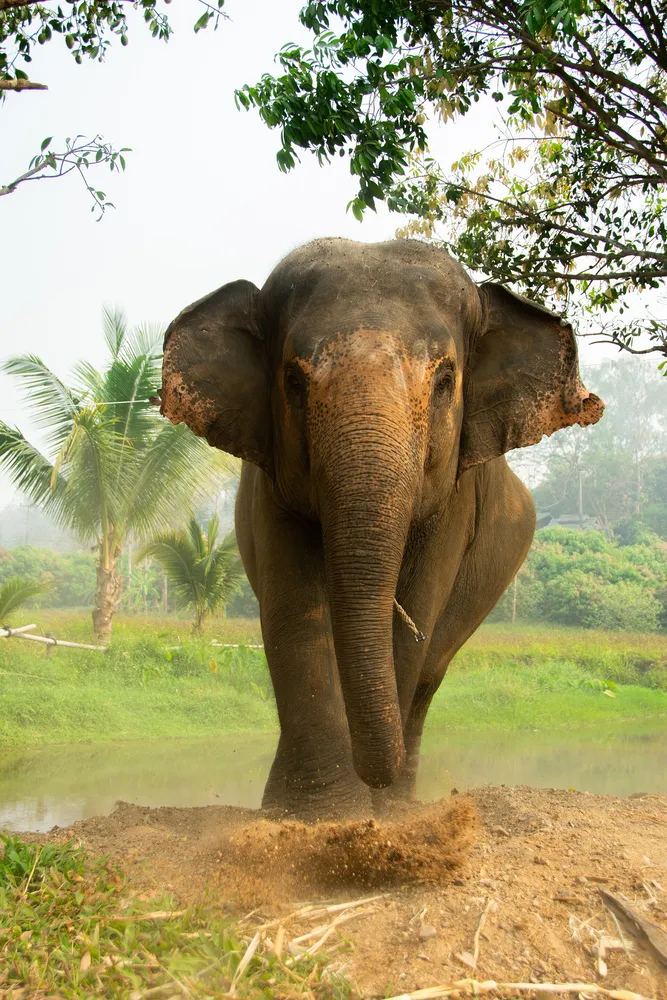
Wild Asian elephants: 300+ in the park. Road encounters happen. If you meet one: stay at least 30 meters back, keep the engine running, reverse calmly if it approaches, and never use the horn. At night, headlights on, indicators off.
Night safari wildlife: Malayan porcupines, civets, owls, nightjars, deer, gaur — and occasionally wild elephants crossing in the dark.
Reptiles: Chinese water dragons (colorful, common near streams) and multiple pit viper species (watch where you step on forest trails).
Night Safari: The Experience You Can't Miss
Cost: 600 THB per vehicle (up to 8 people, so 75–150 THB each) — arguably the best value activity in the park. Two slots:
- First: 19:00–20:00
- Second: 20:00–21:00
How to book: Register in person at the Visitor Center service desk before 18:00 on the day — arrive by 17:00 to be safe. No online pre-booking available.
The format: a park pickup truck with a ranger and a spotlight, 10 km route, ~1 hour. Personal flashlights are prohibited (lights disturb animals). Driving privately inside the park after 18:00 is illegal (500 THB fine) and genuinely dangerous — elephants cross roads in total darkness.
Getting There from Bangkok
By Private Car (Recommended)
The fastest route uses the M6 Motorway (Bang Pa-in to Nakhon Ratchasima). Join at Bang Pa-in Interchange, drive east, exit at Pak Chong Toll Plaza, then follow Highway 2090 (Thanarat Road) 22 km south into the park.
| Detail | Information |
|---|---|
| Distance from Bangkok | ~200 km |
| Drive time (M6 motorway) | 2–2.5 hours |
| Drive time (old Hwy 2) | 3–3.5 hours |
| M6 toll (sedan, one way) | ~240 THB |
| Fuel estimate (round trip) | 400–500 THB |
| Vehicle parking fee in park | 30 THB |
Key tip: Fill up in Pak Chong — no fuel stations inside the park. Download offline maps before entering; cell signal is patchy throughout.
⚠️ August 2026 update: the Bang Pa-in–Pak Chong stretch (110 km) of M6 is now free every Friday 12:00 through Sunday midnight, starting August 21, 2026 (no need to pay the 240 THB toll from the table above during this period) — though the return trip currently requires a temporary detour via Thanarat and Mittraphap roads. Read the full conditions, hours and ramps at M6 & M82 Motorways Open Free 2026.
See the Thailand road trip guide for planning tips, and check your car before a long drive — car maintenance checklist 2026 covers everything.
By Bus
Mo Chit Bus Station → Pak Chong: coaches every 30 minutes, 180–280 THB, 3–3.5 hours. From Pak Chong, take the local songthaew (shared pickup truck) to the park's north gate — 15 THB, runs 06:00–17:00 every 30 minutes. Or a motorcycle taxi for 100–150 THB.
By Train
Hua Lamphong or Bang Sue Grand Station → Pak Chong (Northeast Line): 8 daily services, 3–4.5 hours, 130–900 THB depending on class. Book via SRT D-Ticket app or 12go.asia.
By Tour
Full-day tour from Bangkok (return transport + guide + entry + lunch): 1,600–2,500 THB per person. Departs 06:00–07:00, arrives park 09:00–10:00.
Entrance Fees and Park Facilities
| Category | Thai Citizens | Foreigners |
|---|---|---|
| Adults | 40 THB | 400 THB |
| Children (3–14 yrs) | 20 THB | 200 THB |
| Seniors/Disabled (Thai) | Free | 400 THB |
| Car (4-wheel) | 30 THB | 30 THB |
| Motorcycle | 20 THB | 20 THB |
Hours: 06:00–18:00 daily. Tickets at the gate or via the DNP QueQ app.
Trails: Most trails (2, 3, 4, 5, 6) require a ranger guide — 300–500 THB per group, arranged at the Visitor Center. Self-guided trails: Trail 1 (Visitor Center loop, 800 m) and Trail 7 (Sai Sorn Reservoir, 2.7 km). The Yod Khao Khieo summit viewpoint (1,290 m) is closed June 1 – September 30 annually due to slippery conditions.
Bat exodus viewpoint (Km. 30): At sunset, millions of bats spiral out of a nearby cave in a swirling column visible for kilometers — one of Khao Yai's signature natural spectacles. Ask at the Visitor Center for the current departure time.
Best Time to Visit
| Period | Weather | Waterfalls | Wildlife | Crowds |
|---|---|---|---|---|
| Jun–Oct (rainy) | 20–26°C, afternoon rain | At peak power | Good (near water) | Low |
| Nov–Feb (cool/dry) | 15–25°C, clear | Moderate | Excellent (clearer views) | Highest |
| Mar–May (hot) | 26–32°C, humid | Thin or dry | Low | Low |
| Oct–Nov (transition) | 20–28°C, comfortable | Still strong | Excellent | Moderate |
Recommended window for most visitors: October–November hits the sweet spot — waterfalls still flowing powerfully from rainy season, forest green, weather comfortable, crowds manageable.
Rainy season (currently, June–October) is better than most think: Rain typically falls in the afternoon (14:00–17:00), leaving mornings clear. Plan waterfall visits in the morning — you'll get the most dramatic flows without getting soaked. The downside: the Yod Khao Khieo summit trail is closed, and you'll need closed shoes and DEET for leeches and mosquitoes on forest trails.
Want colder fog and a longer drive from Bangkok? Chiang Khan-Loei runs noticeably colder from November to January, and you can hike up Phu Kradueng to camp above the clouds.
Accommodation for Every Budget
Budget (Camping – 500 THB/night)
- Camping in the park (Pha Kluai Mai or Lam Ta Khong campsites): 80 THB per person/night + tent rental 225 THB (2–3 person) + sleeping bag 30 THB. Book in advance through the DNP website.
- Guesthouses in Pak Chong town: 300–500 THB/night. Greenleaf Guesthouse is particularly well regarded — budget rooms, affordable guided tours (half-day 500 THB, full-day 1,500 THB), meals 50–80 THB.
Mid-Range (1,500–6,000 THB/night)
- Hotel Labaris Khao Yai: Resort with pool and The Fable Feast restaurant, from ~2,500 THB
- U Khao Yai: Modern design, garden-view balconies, 2,000–3,500 THB
- Mont Blanc Basecamp, Hotel MYS Khao Yai: 1,500–4,000 THB range
Luxury (8,000 THB and up)
- Kirimaya Golf Resort & Spa: The most acclaimed property in the area. Horizon View rooms from ~10,000 THB/night. Golf course, spa, exceptional restaurant.
- Muthi Maya Forest Pool Villa: Private villas with infinity pool overlooking the forest, from 6,000–7,000 THB/night
- InterContinental Khao Yai Resort, Mövenpick Resort Khao Yai: Comparable luxury tier
Booking tip: Weekdays are 30–50% cheaper than weekends. During the cool season (Dec–Feb), accommodations book out weeks ahead. Right now (rainy season), rates are better and availability easy.
The Wineries: Khao Yai's Hidden Treasure
Many visitors rush in and out of the national park without realizing they're in Thailand's best wine country. The region's elevation, cooler temperatures, and sandy soils produce wine that genuinely competes internationally.
GranMonte Vineyard and Winery: Family-owned, zero-waste operation producing award-winning Syrah and Viognier. Vineyard tour + tasting (3 wines): ~450 THB per person. Premium package with 3-course lunch at VinCotto restaurant: ~950 THB. Book ahead.
PB Valley Khao Yai Winery (Thailand's oldest Khao Yai winery, est. 1989): Wine tasting set (3 wines): 299 THB. Vineyard tour: ~350 THB (4 times daily: 09:15, 11:15, 13:15, 15:15). Great Hornbill Grill restaurant: mains 250–600 THB.
Chok Chai Farm (en route, near Pak Chong): Famous dairy farm with steakhouse and dairy products — a family-friendly stop. Mains 300–500 THB.
2-Day, 1-Night Itinerary from Bangkok
| Time | Activity | Notes |
|---|---|---|
| Day 1 | ||
| 06:00 | Depart Bangkok (M6 motorway) | Fill up fuel before |
| 08:30 | Arrive Pak Chong, breakfast | Local market |
| 09:30 | Enter park (north gate), pay fees | Keep ticket |
| 10:00 | Pha Kluai Mai Waterfall | 1 km trail, birds, orchids |
| 11:30 | Haew Suwat Waterfall | 100 m from car park or 3 km hike |
| 13:00 | Lunch | Park cafeteria or packed lunch |
| 14:00 | Nong Phak Chi Wildlife Tower (Km. 35) | 1 km walk; deer guaranteed |
| 16:00 | Km. 30 Viewpoint (bat exodus at sunset) | Check exact time at Visitor Center |
| 18:00 | Exit park, check in to accommodation | Don't be late! |
| 19:00 | Night safari | Book before 18:00 (600 THB/vehicle) |
| 21:00 | Dinner, sleep | |
| Day 2 | ||
| 06:00 | Re-enter park for dawn wildlife | Gibbons calling, hornbills feeding |
| 07:00 | Sai Sorn Reservoir walk (Trail 7) | 2.7 km, no guide required |
| 10:00 | Haew Narok Waterfall | Allow 2 hours total |
| 13:00 | Late lunch, exit park | |
| 14:30 | GranMonte or PB Valley Winery | Wine tasting, vineyard photos |
| 17:00 | Drive back to Bangkok | Arrive 19:30–20:00 |
Budget Summary Per Person (2 Days / 1 Night from Bangkok)
| Item | Budget | Mid-Range | Luxury |
|---|---|---|---|
| Transport (return) | Bus: 360 THB | Shared car: 500 THB | Private car: 700+ THB |
| Park entry (Thai) | 40 THB | 40 THB | 40 THB |
| Accommodation (1 night) | 300–500 THB | 1,500–3,000 THB | 8,000–17,000 THB |
| Food (2 days) | 300–500 THB | 700–1,200 THB | 2,000–4,000 THB |
| Night safari (÷4 people) | 150 THB | 200 THB | 300 THB |
| Guide (shared) | 100 THB | 200–300 THB | 500 THB |
| Winery (optional) | — | 450 THB | 950 THB |
| Estimated Total (Thai) | 1,250–1,650 THB | 3,590–6,190 THB | 12,000–24,000 THB |
Foreigners: add 360 THB for the higher entry fee (400 THB vs 40 THB)
Common Mistakes at Khao Yai
1. No DEET insect repellent: In rainy season, leeches are on every forest trail. Don't rely on long sleeves alone. Buy DEET spray at a 7-Eleven in Pak Chong for 40–70 THB before entering.
2. Wearing sandals or flip-flops: Rangers can and do turn visitors back at Trail 2 and beyond. Leeches, mud, and roots make closed shoes mandatory, not just advisable.
3. Underestimating exit time: The park closes at 18:00 sharp. Haew Narok is 22 km from the north gate over slow park roads. Leave by 16:30 at the latest to be safe.
4. Day-tripping only: You can see a waterfall in a day, but you'll miss the night safari, dawn wildlife (the best time for gibbons, hornbills, and elephants), and the full experience of the forest. Even one night changes everything.
5. Visiting on a Thai public holiday: During peak long weekends in the cool season, the queue for Haew Narok parking can stretch 2+ km. Accommodation within 30 km sells out. Go on a weekday, or go now (rainy season) when crowds are thin.
6. Booking the night safari too late: The desk is first come, first served. Arrive before 17:00 to secure a slot for the evening.
7. Forgetting cash: Parking fees, night safari, snack stands — cash only. Bring enough before entering.
8. Flying a drone: Completely banned inside the park without prior written authorization. Fines up to 100,000 THB. In practice, authorization for recreational use is never granted.
9. Underestimating snake risk: Multiple pit viper species live here. Stick to main trails, wear closed shoes, and don't reach into undergrowth. The risk is real but manageable with basic precautions.
10. Skipping the wineries: Many visitors don't realize they're in Thailand's best wine region. The Khao Yai winery experience is genuinely unique in the country — a memorable bonus to any visit.
Travel Smart: Don't Forget Insurance
For capturing waterfalls, wildlife, and night safari footage, a waterproof action camera like the DJI Osmo Action 5 Pro or GoPro Hero 13 outperforms any phone in humidity and low light — well worth considering before the trip.
For any trip into the wilderness — hiking, wildlife encounters, slippery waterfall trails — unexpected accidents happen. A domestic travel insurance policy costs just tens of baht per trip and covers medical treatment from accidents, emergency evacuation, and other travel mishaps. Well worth the peace of mind.
Verdict: Is Khao Yai Worth It?
Without hesitation: yes. Khao Yai National Park delivers a genuine wilderness experience — wild elephants, world-class hornbills, thundering waterfalls, gibbon calls at dawn — within easy reach of Bangkok. The rating of 4.5/5 reflects its exceptional biodiversity, accessibility, and range of experiences; the half-point reflects peak-season crowding that requires planning to avoid.
Best for:
- Families who want children to see real wildlife up close
- Couples who want nature + an excellent wine country dinner
- Wildlife photographers and birders
- Anyone wanting a 2–3 day escape from Bangkok
Less ideal for:
- Those seeking beaches or the sea
- Anyone with a strong aversion to insects or mud
- Visitors who want to stay entirely in air-conditioned comfort
Best timing: October–November (perfect blend of full waterfalls, lush forest, good wildlife, manageable crowds) or right now in the rainy season (June–August, for the most dramatic waterfalls, lowest crowds, and coolest temperatures). Stay at least one night, do the night safari, and stop at a winery on the way back.
If you are exploring northern Thailand further, consider adding a Chiang Rai 3-day trip — the White Temple, Blue Temple, Singha Park, and Golden Triangle deliver a completely different flavour of the north. For something closer to Bangkok with a completely different character, Kanchanaburi pairs wartime history with one of Thailand's most beautiful waterfalls (Erawan) — also excellent in rainy season.
Sources
- Department of National Parks, Wildlife and Plant Conservation (DNP) — entrance fees, regulations, and trail information
- thainationalparks.com — wildlife statistics (300+ elephants, 440 bird species, 4 hornbill species)
- GranMonte Vineyard & Winery (granmonte.com) — tour pricing and details
- PB Valley Khao Yai Winery — tasting and tour pricing
- Ticket2Attraction — winery and activity pricing for 2026
- Expressway Authority of Thailand — M6 motorway toll information
- Multiple independent visitor accounts (borapush.com, travellikeanna.com) — leech/DEET advice and seasonal conditions
Frequently asked questions
- How much is the entrance fee to Khao Yai National Park in 2026?
- Thai adults 40 THB, children (3–14 years) 20 THB, seniors/disabled free. Foreigners: adults 400 THB, children 200 THB. Vehicle fee: 30 THB for a 4-wheel car.
- What are Khao Yai's opening hours?
- Open 06:00–18:00 daily. You must exit by 18:00 sharp — driving inside after closing is illegal (500 THB fine). Plan to leave Haew Narok waterfall by 16:30 to reach the gate in time.
- Is Khao Yai worth visiting in the rainy season?
- Absolutely yes! June–October is when Haew Narok and Haew Suwat waterfalls are at peak power and beauty. The forest is brilliantly green, temperatures are a cool 20–26°C, and crowds are thin. Bring closed shoes and DEET insect repellent for leeches and mosquitoes.
- How much is the Khao Yai night safari?
- 600 THB per vehicle (up to 8 people, so 75–150 THB per person). Two slots: 19:00–20:00 and 20:00–21:00. Book at the Visitor Center before 18:00 on the day — arrive by 17:00 to be safe.
- What is a realistic budget for 2 days / 1 night from Bangkok?
- Thai citizens on a budget: ~1,250–1,650 THB per person (bus 360 THB + entry 40 THB + budget guesthouse 300–500 THB + food 400–600 THB + night safari split 150 THB). Foreigners add 360 THB for the higher entry fee.
- Is Khao Yai suitable for young children?
- Yes, with good planning. Kong Kaew and Haew Suwat waterfalls are a short walk (under 1 km), wildlife can be spotted from the car, and kids love the night safari. Note: Haew Narok requires a steep 50-meter staircase descent — challenging for very young children.
Related articles
Pai, Mae Hong Son Travel Guide 2026: Sights, Stays & 3-Day Plan
Complete 2026 guide to Pai, Thailand: the 762-curve drive, must-see sights, stays for every budget, real costs, and a working 3-day itinerary.
Pattaya Travel Guide 2026 — Highlights, Real Costs & a 3-Day Itinerary
Complete 2026 Pattaya travel guide: Koh Larn, Sanctuary of Truth, Nong Nooch, getting there, real budgets, hotels for every budget, plus a 3-day itinerary.
6 Trips Near Bangkok for the Aug 12–16, 2026 Long Weekend
6 getaways near Bangkok, all under a 4-hour drive, for the Aug 12–16, 2026 long weekend — real costs, places to stay, and how to pick by budget and style.