Pai, Mae Hong Son Travel Guide 2026: Sights, Stays & 3-Day Plan
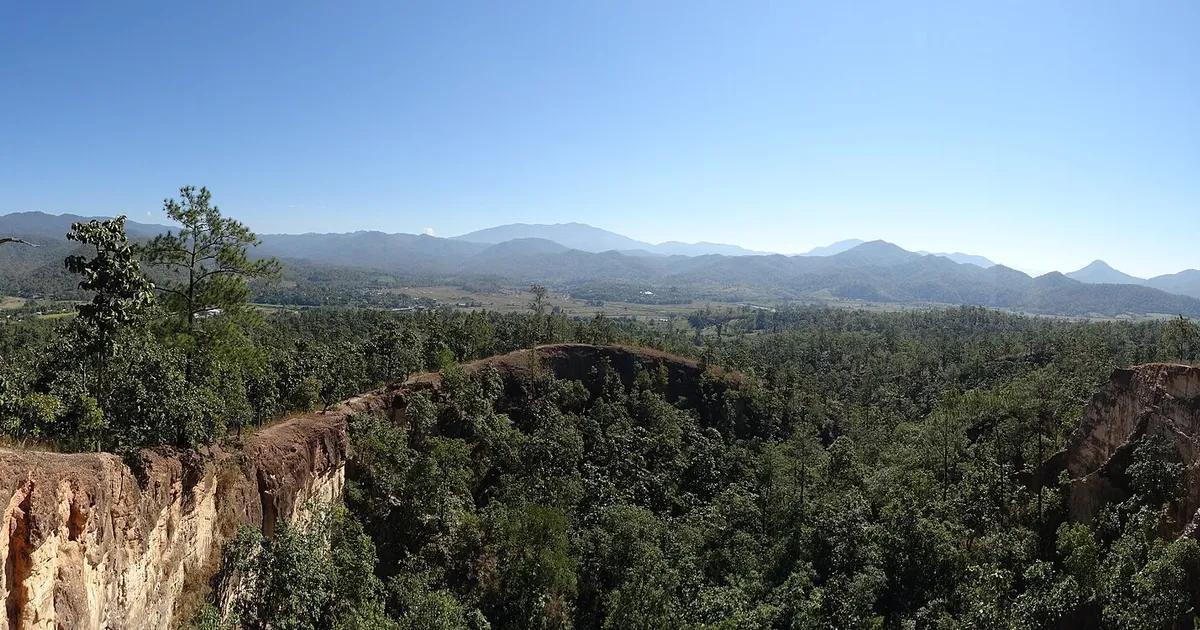
"Pai" has practically become shorthand for Thailand's slow-life vibe — a small town tucked in a valley in Mae Hong Son province, ringed by green mountains, with the Pai River winding through the center, wide rice fields all around, and a sea of mist to watch at dawn during cool season. But getting to Pai comes with details worth knowing first — from the 762-curve road that leaves many people carsick, to the best time to go for the prettiest scenery. This guide covers everything you need before visiting Pai: getting there, must-see sights, stays for every budget, real costs, and a working 3-day, 2-night itinerary.
What Makes Pai So Special
Pai is a small district in Mae Hong Son province, northern Thailand, about 132 km from Chiang Mai. The town sits in a valley the Pai River runs through, surrounded by the Thanon Thongchai mountain range and towering peaks. What has made Pai a favorite destination for both Thai and international travelers for over 20 years:
- A slow-life atmosphere you can't find in big cities — the town is tiny, walkable end to end, with no high-rises and no traffic jams
- Diverse nature packed into a small area — a canyon, waterfalls, hot springs, rice fields, and a sea of mist all within about 15 km of each other
- A blended culture — a traditional Shan community, a Yunnanese Chinese village of settlers, and long-staying foreign visitors who've become part of the town's fabric, giving the food and café scene unusual variety for such a small place
- A walking street that comes alive every night — unlike typical night markets focused on shopping, Pai's walking street centers on street food and live music, with the warm feel of a small nightly festival
Worth knowing before you go: Pai isn't a destination for those wanting luxury or serious shopping. Most stays are small guesthouses and boutique resorts, convenience stores are limited, and ATMs are few and far between in town. Bring enough cash, since many shops don't accept cards.
Best Time to Visit Pai
Timing matters more in Pai than in many destinations, because the weather completely changes the vibe.
November-February (cool season) — the best time: A comfortable 15-25°C with clear skies, ideal for walking around and taking photos. December-January offers the highest chance of a sea of mist, especially at Yun Lai viewpoint and Wat Phra That Mae Yen in the early morning. The downside: this is full peak season, so accommodation books up fast around New Year and long holidays, with prices sometimes 2-3x higher. Book at least 1-2 months ahead if you're going during this window.
March-May (hot season) — best avoided if possible: This is northern Thailand's crop-burning season, and PM2.5 levels often spike enough to obscure views and affect health. Daytime temperatures also run hot (up to 35-38°C). If you must travel during this period, always check air quality readings before you go.
June-October (rainy season) — budget-friendly, lush scenery: Rice fields around town turn vivid green, waterfalls flow at their strongest and prettiest all year, and crowds thin out noticeably compared to cool season. Accommodation prices drop meaningfully too. The downside: the already-winding Route 1095 gets slicker in the rain, and landslides occasionally close risk-prone sections temporarily — always check weather and road conditions before setting out.
Getting to Pai — Every Option Compared
The main route is Highway 1095 (Chiang Mai-Pai-Mae Hong Son), considered one of the most winding roads in Thailand. The Chiang Mai-Pai stretch alone has more than 762 curves over 132 km (the full loop through Mae Hong Son and Mae Sariang back to Chiang Mai totals more than 1,800 curves).
| Method | Travel time | Approximate price | Best for |
|---|---|---|---|
| Minivan (Premprapha, etc.) | 2.5-3 hours | 150-250 baht/trip | Most travelers — fast, frequent, hourly departures |
| Ordinary bus/coach | 3.5-4 hours | 150-330 baht/trip | Tight budgets, no rush, high curve tolerance |
| Self-drive rental car | 2.5-3 hours | Rental cost + fuel | Independent travelers who want to stop at viewpoints |
| Rented motorbike (self-ride) | 3-4 hours | 150-300 baht/day + fuel | Confident motorbike riders who enjoy a challenge |
| Chartered van/taxi | 2.5 hours | 1,500-2,000 baht/trip (whole vehicle) | Groups splitting the cost |
| Flight + onward transport from Mae Hong Son | ~1.5-2 hours total | Airfare + connecting transport | Travelers doing the full Mae Hong Son loop |
Where to catch the van in Chiang Mai: Arcade Bus Station (Chang Phueak) is the main departure point, with hourly runs from early morning to evening. Arrive at least 15-20 minutes early, since seats are limited, especially in peak season.
A word on motion sickness: 762 curves is not just marketing. Many people who don't normally get carsick end up feeling ill on this stretch. Take medication before departure if you're not confident, sit in the front seat if possible, and avoid looking down at your phone along the way.
Must-See Sights in Pai Town
Pai Canyon (Kong Lan)
Pai's signature natural landmark — sandy soil eroded into narrow ridges separated by deep gullies. Some sections of the trail narrow to just 30-50 cm wide with drops on both sides, so walk carefully, especially with children. Free to enter. The best time is late afternoon before sunset, when golden light hits the sandy cliffs for especially striking photos. Wear shoes with good grip — the sandy trail gets slippery, especially after rain.
Tha Pai Memorial Bridge
A dark green iron bridge built by Japanese forces during World War II to move weapons and supplies across the Pai River toward Myanmar. Now open to visit for free, all day. It's a popular photo spot, with the old iron structure set against green mountains for a shot that feels both historic and natural at once. Less than 10 minutes from town by car.
Wat Phra That Mae Yen (Big Buddha Pai)
An old temple on a hill east of town, just 2 km away. The highlight is climbing more than 300 steps to a large Buddha statue at the summit, in a Lanna-Burmese architectural style — but what draws the crowds is the 360-degree panoramic view of Pai town and the surrounding valley, with the Pai River clearly winding through the rice fields below. Best visited early morning or before sunset to avoid the heat during the climb.
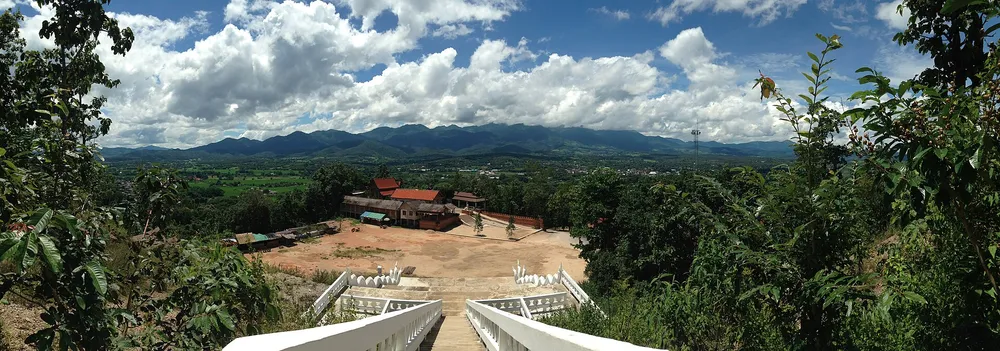 Photo: ElonggnolE — CC BY-SA 4.0 via Wikimedia Commons
Yun Lai Mist Viewpoint & Santichon Village
A small hilltop viewpoint at Santichon Village, about 6 km from town, open 05:30-18:00. Entrance fee: 20 baht. In the early morning (before 07:00) during cool season, there's a good chance of a sea of mist covering the entire valley, at its best in December-January. Santichon itself is a Yunnanese Chinese settler community, with shops selling steamed buns, Chinese tea, and Yunnan-style snacks along the walk up.
Mo Paeng Waterfall
A mid-sized waterfall in Mae Na Toeng subdistrict with year-round flow, split into 3 tiers totaling about 5 meters in height and 10-15 meters wide. Free to enter. Its clear swimming pool is the highlight, ideal for families since the water is shallow and gentle compared to the bigger falls at Khao Yai or Doi Inthanon. Go in the morning to avoid crowds, and bring a spare change of clothes.
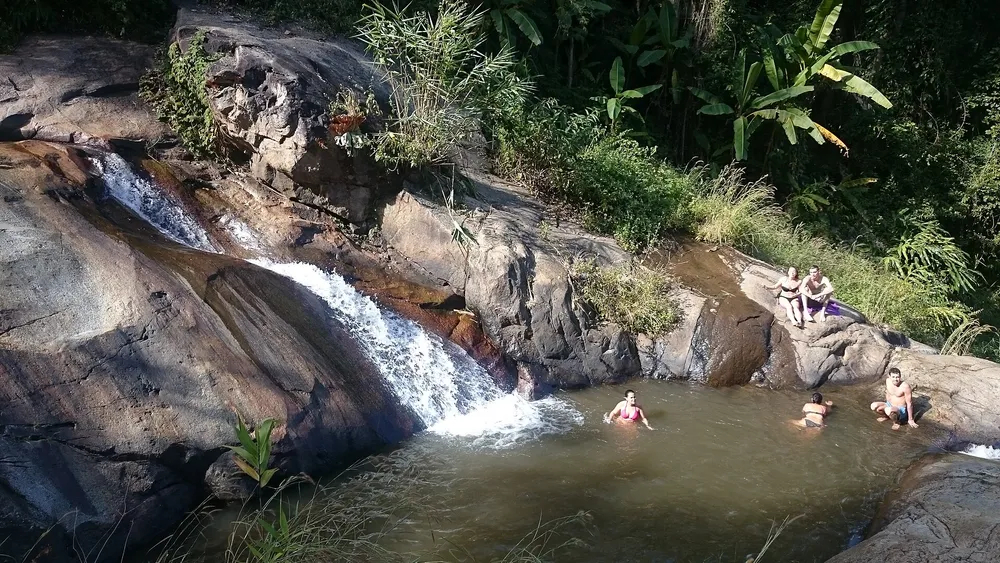 Photo: Sgroey — CC BY-SA 4.0 via Wikimedia Commons
Tha Pai Hot Springs
Natural hot springs about 15 minutes from town via rural road Mae Hong Son 4024. Entrance: 50 baht for Thai adults, 20 baht for children, 300 baht for foreigners, plus 30 baht per car. Foot-soak and full-immersion pools at varying temperatures make it ideal for relaxing sore muscles after a day of sightseeing. For a cheaper alternative, Sai Ngam Hot Spring (20 baht entry) has striking emerald-green water.
The Land Split
A small family-run fruit garden that opened as an attraction after an earthquake split the family's land years ago. The owners let visitors in for free and hand out fruit and herbal drinks grown on their own land (donations aren't required but are appreciated to support the family) — a rare example of unpolished, genuine community tourism.
Pai Walking Street
Open nightly from around 17:00-23:00, running the length of the town's main street. Unlike a typical night market focused on goods, Pai's walking street leans into multi-national street food (Thai, Yunnanese Chinese, Western), live music from small storefronts, and handmade crafts from local artisans rather than mass-produced goods. Easy to lose an hour or two just wandering.
Extending to Mae Hong Son — If You Have More Than 3 Days
With 4-5 days, driving on from Pai to Mae Hong Son town (another roughly 100 km, just as winding) opens up several more legendary sights:
Pang Ung (Pang Tong Royal Project 2): A hilltop reservoir surrounded by pine forest. On cool-season mornings, mist rises off the water's surface for a scene that feels almost foreign. January has the highest chance of mist on the water (morning temperatures average just 9-13°C), while November — despite beautiful valley mist elsewhere — usually isn't cold enough to produce mist on the lake itself.
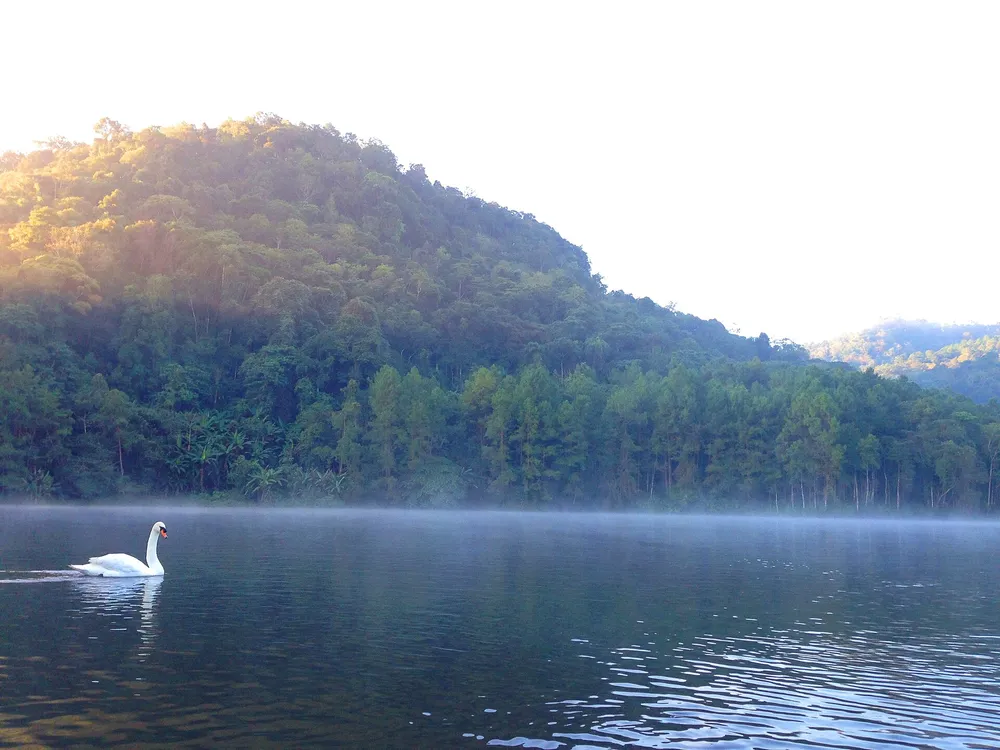 Photo: Platoos — CC BY-SA 4.0 via Wikimedia Commons
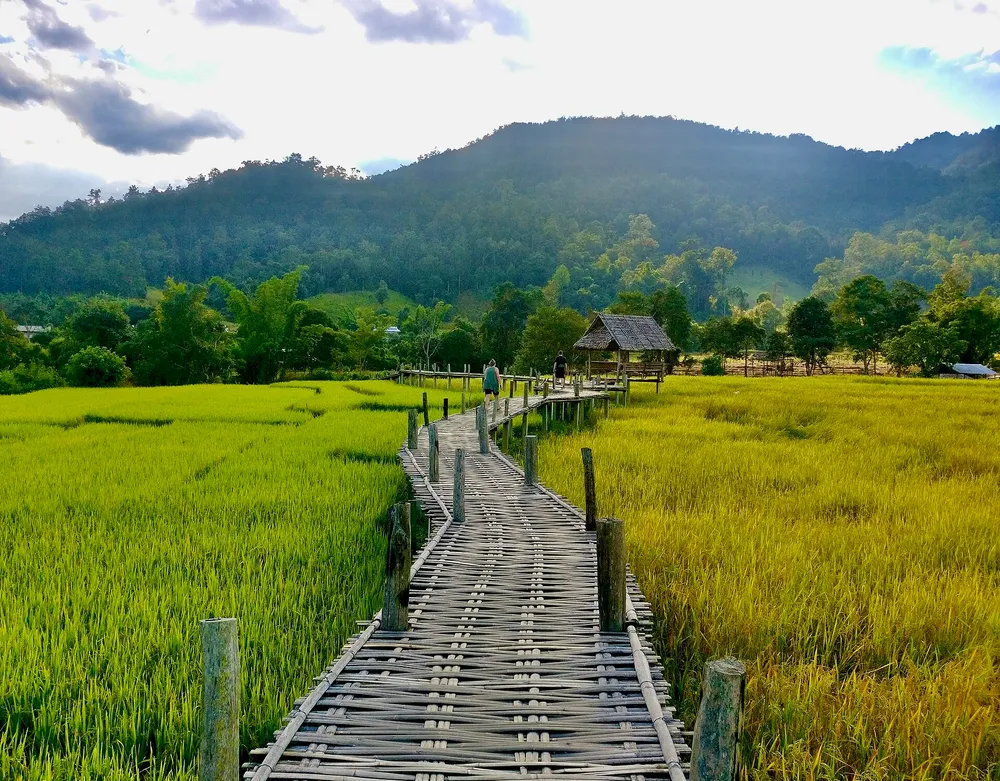 Photo: Eerin25 — CC0 via Wikimedia Commons
Su Tong Pae Bridge (Boon Kho Ku So): A long bamboo footbridge stretching across rice fields near Mae Hong Son town, built jointly by monks and villagers. Early morning, when light mist hangs over the fields, is the most beautiful time. Crossing is free — ideal for morning photos before the sun gets harsh.
Fish Cave and Wat Phra That Doi Kong Mu: The Fish Cave is a sacred pool home to large numbers of carp, while Wat Phra That Doi Kong Mu sits on a hilltop above town, offering a single vantage point over the entire city of Mae Hong Son — especially striking at sunset.
An important caution: the entire Pai-Mae Hong Son road is winding with landslide-prone sections during the rainy season. Drive only during daylight hours — many stretches lack adequate street lighting, and morning or evening fog can obscure visibility. If you're not confident about the route, taking a scheduled van or hiring a driver who knows the road is safer than driving yourself.
Real Costs for a 3-Day, 2-Night Trip to Pai
| Item | Budget | Comfort |
|---|---|---|
| Round-trip van, Chiang Mai-Pai | 300-500 baht | 300-500 baht |
| 2 nights lodging | 700-1,600 baht (350-800/night) | 3,000-6,000 baht (1,500-3,000/night) |
| Food, 3 days | 600-900 baht (200-300/day) | 1,500-2,400 baht (500-800/day) |
| Entrance fees (Yun Lai + hot springs + others) | 150-200 baht | 150-250 baht |
| Motorbike rental, 3 days + fuel | 450-600 baht | - (charter a vehicle instead) |
| Local vehicle charter, 3 days | - | 1,500-2,500 baht |
| Total per person, approx. | 2,200-3,800 baht | 6,450-11,650 baht |
Note: excludes transport to Chiang Mai (flight/train/bus from Bangkok), and assumes 2+ travelers splitting lodging and chartered transport costs.
During peak season (December-January, New Year, long holidays), lodging prices can run 2-3x higher than shown above. Check upcoming public holidays ahead of time to plan around the most crowded stretches, or book lodging as early as possible if you must travel then.
A Working 3-Day, 2-Night Pai Itinerary
| Day | Morning | Afternoon | Evening |
|---|---|---|---|
| Day 1 | Depart Chiang Mai on a morning van (arrive Pai around noon) | Check in, rest, wander around town | Pai Walking Street — street food and live music |
| Day 2 | Pai Canyon + Tha Pai Memorial Bridge | Mo Paeng Waterfall (swim) + Tha Pai Hot Springs (soak) | Sunset at Yun Lai + Santichon Village |
| Day 3 | Early visit to Wat Phra That Mae Yen for the morning view | The Land Split + morning market souvenir shopping | Van back to Chiang Mai (arrive early evening) |
With 1-2 extra days, swap Day 3 for a drive on to Mae Hong Son to see Pang Ung and Su Tong Pae Bridge as described above, then loop back to Chiang Mai on the final day.
Recommended Stays & Restaurants
Budget stays (350-800 baht/night): Guesthouses in the style of Canary Guest House offer simple, clean rooms near the walking street, an easy walk to food and nightlife — ideal for travelers who prioritize sightseeing over the room itself.
Mid-to-upper range (1,500-3,000+ baht/night): Riverside resorts such as B2 Pai Premier Resort or The Oia Pai Resort emphasize mountain views and privacy, well-suited to couples or families who want a beautiful view without needing to go far.
Breakfast: Rak Tom Lueat Mu Pai serves classic morning fare — stewed pork leg rice, chicken rice, duck noodles, blood soup — averaging 50-100 baht.
Northern Thai food: Khao Soi Phi Nong serves punchy khao soi with beef, chicken, or pork, a good pick for lunch or dinner after a day of sightseeing.
Coffee: Pai has cute cafés scattered across town, starting around 75-200 baht, mostly clustered near Rasi Yanon Road by the central traffic light — easy to stumble on while walking.
Key Tips & Common Mistakes
1. Underestimating travel time 762 curves isn't just marketing copy. Many travelers plan to reach Pai in 2 hours and are disappointed when the van actually takes 2.5-3 hours. Build in buffer time and don't schedule your first activity too soon after arrival.
2. Not bringing motion sickness medication Even people who normally never get carsick can feel ill on this stretch of road. Take medication before departure if you're at all unsure.
3. Renting a motorbike without prior riding experience Pai sees frequent tourist motorbike accidents, mostly from first-timers. In-town roads have unexpected hills and sharp turns. If you're not confident, hire a driver or stick to walking/cycling for short distances instead.
4. Traveling in peak season without booking ahead December-January and long holidays fill up fast — sometimes a month or more in advance. Book the moment you decide to travel during this window.
5. Not carrying enough cash Many shops in Pai, especially small vendors on the walking street and local eateries, don't accept cards. ATMs are limited in town. Withdraw enough cash in Chiang Mai or as soon as you arrive.
6. Skipping travel insurance Winding mountain roads carry higher accident risk than flat roads, and remote areas can mean a longer wait for emergency care. Getting domestic travel insurance before departure is cheap protection that's well worth it — starting at a few hundred baht but covering tens of thousands in a real emergency. Read more in our domestic travel insurance guide.
7. Not checking your vehicle before self-driving If you're driving yourself from Chiang Mai, continuous steep grades and curves put more strain on brakes and tires than flat roads. Check tire condition and brakes before setting out — see our car tire maintenance guide and safe long-distance driving tips.
Verdict: Is Pai Worth It?
Very much so — if you prepare right. Pai isn't for everyone: if you need big-city convenience or truly dread winding roads, it may not be your kind of trip. But if you love nature, quiet surroundings, and don't mind a bit of travel discomfort, Pai delivers an experience you won't find elsewhere in Thailand.
With 3 days: Pai Canyon, the Memorial Bridge, Mo Paeng Waterfall, the hot springs, Yun Lai, and the walking street cover every major highlight.
With 4-5 days: add the extension to Mae Hong Son for Pang Ung and Su Tong Pae Bridge, or use Chiang Mai as a base and explore Doi Inthanon and Chiang Mai city further as well.
Before you go, check upcoming public holidays to plan your travel dates around the busiest stretches, and if you're driving an EV, try our EV trip planner to see where you'll need to charge along the way.
Sources
- Tourism Authority of Thailand (TAT) — Pai and Mae Hong Son attraction listings
- Pai Subdistrict Municipality — official list of attractions within the municipal area
- 12go.asia — Chiang Mai-Pai van/bus pricing and schedules, 2026
- Thesunsight.com — Pang Ung data and Mae Hong Son mist-season timing
- Local operator listings for Tha Pai Hot Springs and Sai Ngam Hot Spring entrance fees
Frequently asked questions
- How far is Pai from Chiang Mai, and how long does it take?
- Via Highway 1095 it is about 132 km, taking roughly 2.5-3 hours by minivan (a bit longer, 3.5-4 hours, on an ordinary bus). The route is famous for having more than 762 curves, so budget extra time and prepare for motion sickness.
- When is the best time to visit Pai?
- November-February (cool season) is best: a comfortable 15-25°C, clear skies, and the highest chance of a sea of mist in December-January. It is also peak season, so crowds are heavier and accommodation can cost 2-3x more — book at least 1-2 months ahead. For a quieter, cheaper trip with lush green rice fields and stronger waterfalls, try the rainy season (June-October), though mountain roads get slicker.
- I get carsick easily — how do I handle 762 curves?
- Take motion sickness medication at least 30 minutes before departure (not once you already feel sick — it needs time to work). Sit in the front seat or first row of middle seats, which sway less than the back. Look far ahead at the horizon rather than down at your phone. Eat a light meal beforehand — not too full or too hungry — and travel in the morning if possible, when roads are quieter and the heat is milder.
- How many days do I need in Pai?
- Two days, one night covers the main highlights if you rush, but 3 days, 2 nights is the recommended length — enough for Pai Canyon, waterfalls, hot springs, the mist viewpoint, and an unhurried evening at the walking street. With 4-5 days, extend to Mae Hong Son town for Pang Ung and Su Tong Pae Bridge.
- What does a 3-day, 2-night trip to Pai cost?
- A budget trip runs about 2,200-3,800 baht per person (excluding transport to Chiang Mai): round-trip van 300-500 baht, 2 nights of lodging 700-1,600 baht, 3 days of food 600-900 baht, entrance fees 150-200 baht total, and a 3-day motorbike rental with fuel 450-600 baht. A more comfortable trip with nicer stays and dining runs roughly 5,000-8,000 baht per person.
- Is renting a motorbike in Pai safe?
- It's safe if you already know how to ride and stay careful, but Pai sees frequent tourist motorbike accidents — mostly first-time riders renting on the spot. In-town roads have unexpected hills and sharp turns, and surfaces can turn gravelly after rain. Always wear a helmet (local police enforce this), and if you are not confident, hire a driver (a red songthaew) or a chartered van instead.
Related articles

Chiang Rai Travel Guide 2026: 3 Days 2 Nights, White Temple & More
Chiang Rai travel guide 2026 — 3-day 2-night itinerary, entrance fees, budget breakdown, accommodation, restaurants and rainy-season tips.
Pattaya Travel Guide 2026 — Highlights, Real Costs & a 3-Day Itinerary
Complete 2026 Pattaya travel guide: Koh Larn, Sanctuary of Truth, Nong Nooch, getting there, real budgets, hotels for every budget, plus a 3-day itinerary.
6 Trips Near Bangkok for the Aug 12–16, 2026 Long Weekend
6 getaways near Bangkok, all under a 4-hour drive, for the Aug 12–16, 2026 long weekend — real costs, places to stay, and how to pick by budget and style.