Historic First: No Women Under 25 Died from Cervical Cancer in England for Five Straight Years

Between 2020 and 2024, not a single woman aged 20–24 died from cervical cancer in England — the first such five-year period in recorded medical history. A landmark study published in The Lancet on 18 June 2026, led by researchers at Queen Mary University of London and funded by Cancer Research UK, delivers the first direct population-level evidence that HPV vaccination prevents cervical cancer deaths. After nearly two decades of immunising schoolgirls, the numbers confirm what scientists had long hoped for: the vaccine doesn't just slow the disease — it can make it virtually disappear in a generation.
The Numbers That Made History
Before England launched its school HPV vaccination programme in 2008, roughly 20 women under 30 died of cervical cancer every year. As the cohort vaccinated at ages 12–13 grew into their twenties — and with around 90% of women in the 20–24 age group having been vaccinated as teenagers — the death toll in that bracket fell to zero over a full five-year period.
The benefit extends beyond the youngest cohort. Among vaccinated women aged 30–34, the risk of dying from cervical cancer was 63% lower than in unvaccinated peers — clear evidence that protection deepens as vaccinated generations age.
Researchers estimate that England's HPV programme has prevented approximately 200 cervical cancer deaths in total so far, with that figure set to grow steadily as more vaccinated women move through their thirties and forties. Without the vaccine, the 20–24 age group alone would have been expected to record around 23 deaths over those five years.
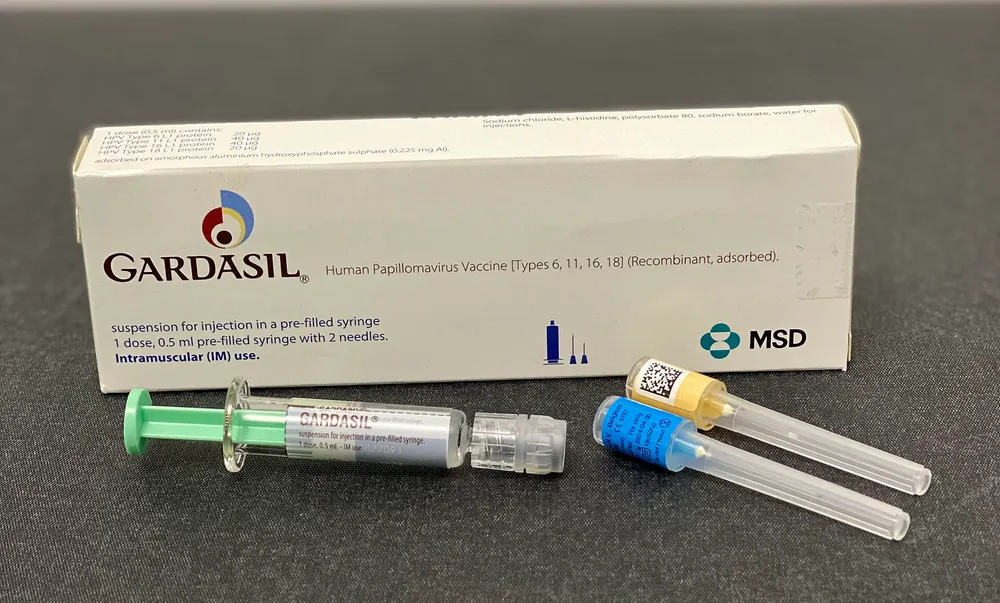
What Is HPV and How Does the Vaccine Work?
Human papillomavirus (HPV) is one of the most common infections transmitted through close contact, with more than 100 known strains. Strains 16 and 18 alone are responsible for over 70% of all cervical cancer cases, and HPV is also linked to cancers of the mouth and throat, anus, and penis.
Today's leading vaccine, Gardasil 9, targets nine high-risk HPV strains and prevents roughly 90% of cervical cancers. It works best when given before any HPV exposure, which is why vaccination in early adolescence is so effective.
England began its school programme for girls aged 12–13 in 2008, extending it to boys in 2019. The country's coverage rate of around 90% for girls in the 20–24 age group today is the direct result of those early mass-vaccination campaigns — and the reason the results of this study were possible.
The Lancet Study: What Researchers Found
Led by Professor Peter Sasieni at Queen Mary University of London, the research team analysed official cancer mortality records and vaccination data for women aged 20–34 in England from 2001 to 2024 — the longest and most comprehensive study of its kind.
| Age Group | Finding |
|---|---|
| 20–24 years | Zero deaths over five years (2020–2024) |
| 30–34 years (vaccinated) | 63% lower death risk vs unvaccinated |
| Under-30s before the programme | ~20 deaths per year |
| Total lives saved so far | ~200 deaths prevented |
| Expected deaths (20–24, without vaccine) | ~23 over 2020–2024 |
The study is the first to provide direct population-level evidence that the HPV vaccine prevents deaths, closing a critical evidence gap — previous data had confirmed the vaccine reduced infections and precancerous lesions, but this is the first time a mortality benefit has been conclusively demonstrated at national scale.

Voices from Researchers
Professor Peter Sasieni, lead author from Queen Mary University of London, described the milestone in striking terms:
"It's incredible to think that a single jab can almost eliminate a particular type of cancer."
Michelle Mitchell, chief executive of Cancer Research UK, which funded the study, added:
"This is an incredible milestone and major progress in our mission to beat cancer."
The significance of this statement of proof should not be understated. For years, public health advocates have relied on indirect evidence to promote HPV vaccination — now they have unambiguous mortality data to back them up.
Thailand: A Country Facing Its Own Cervical Cancer Burden
While England celebrates this public health breakthrough, the global challenge remains enormous. In Thailand, 9,158 women are diagnosed with cervical cancer each year, and 4,705 die from the disease — an average of roughly 12 to 13 deaths every single day.
Thailand added the HPV vaccine to its national immunisation schedule in 2017, offering it free to girls in Grade 5 (ages 11–12) at schools across the country. Since 2023, self-collection HPV screening has been available for women aged 30–60, widening access particularly in rural and remote areas.
The programme is on the right track, but coverage gaps remain. The uptake of the vaccine's second dose in Thailand stands at only 59.3% — well below the WHO's 90% target. The England results make the most compelling case yet for boosting that figure: the difference between 59% and 90% coverage is not just a statistic — it translates directly into lives saved over the coming decades.
Thailand is working toward the WHO's 90-70-90 targets by 2030: vaccinate 90% of girls, screen 70% of women in the target age range, and ensure 90% of those with detected abnormalities receive appropriate treatment.

Looking Ahead: Eliminating Cervical Cancer Is Achievable
What has happened in England sends a clear signal to every country running an HPV programme: the WHO's goal of eliminating cervical cancer as a public health problem this century is not aspirational — it is mechanically achievable with sustained vaccination and screening.
England's NHS has set a target of eliminating cervical cancer as a public health problem by 2040. In February 2026, India launched a nationwide HPV vaccination campaign targeting 11.5 million girls. Around the world, the momentum is building.
The path forward requires three things:
- Higher vaccination coverage — particularly ensuring second-dose uptake reaches 90% in countries like Thailand
- Expanded screening — reaching women in rural areas and underserved communities
- Public awareness — communicating clearly that the HPV vaccine is not just about preventing infection; it is about preventing cancer deaths, as proven
The lesson from England is simple and profound: one of the most powerful cancer-prevention tools in history is not an expensive drug or a future technology. It is a vaccine administered in an ordinary school classroom to a twelve-year-old girl. The results take fifteen to twenty years to fully appear — but when they do, they rewrite the record books.
For more on medical breakthroughs reshaping global health, see Lenacapavir: The Twice-Yearly HIV Prevention Injection and AI-Powered Tuberculosis Screening — two other landmark advances from 2026.
Sources
- Cancer Research UK — New data shows the HPV vaccine is saving lives from cervical cancer
- Down to Earth — Cervical cancer deaths among young women in England fall to zero following HPV vaccination
- The Lancet — Cervical cancer mortality trends following HPV vaccination in England, 2001–24
- Queen Mary University of London — Cervical cancer deaths plummet to record low
- WHO — Eradicating cervical cancer in Thailand
Frequently asked questions
- What age is best to receive the HPV vaccine?
- The HPV vaccine works best before any exposure to HPV. The WHO recommends vaccination at ages 9–14. In Thailand, the Ministry of Public Health provides it free to girls in Grade 5 (ages 11–12) at schools nationwide.
- Does the HPV vaccine provide 100% protection against cervical cancer?
- Not 100%, but Gardasil 9 covers nine high-risk HPV strains and prevents around 90% of cervical cancer cases. Those vaccinated should still have regular cervical screening to catch any remaining risk early.
- Does Thailand have an HPV vaccination programme?
- Yes. Thailand added the HPV vaccine to its national immunisation schedule in 2017, offering it free to girls in Grade 5 (ages 11–12). Since 2023, self-collection HPV screening has also been available for women aged 30–60.
Related news
 Thailand
Thailand Completes '30-Baht Treatment Anywhere' Rollout Across Every Province
Thailand's 30-baht treatment anywhere scheme now covers all 77 provinces — care at any in-network clinic with one ID card, backed by a record 2026 budget.
 World
WorldRattlesnake Blood Yields Antivenom 10x Stronger Than Current Drugs
Proteins from rattlesnake blood, combined, neutralize venom 10x more potently than current antivenom in lab tests — a study with a Thai scientist on the team.
 World
WorldKākāpō Population Soars Past 300 for First Time in 75 Years
New Zealand's kākāpō, the world's heaviest parrot, reached 325 birds after a record 2026 breeding season added 90 chicks — up from just 51 birds in 1995.